WorkSafe NZ Targets Fall Safety in 2026 Crackdown
Construction Safety, WorkSafe NZ, Falls from Height
WorkSafe NZ Targets Falls from Height on Residential Builds in Spring 2026 Crackdown
From October to December 2026, WorkSafe NZ inspectors will be out in force on residential construction sites, with a targeted focus on falls from height. For New Zealand and Australian construction professionals operating in this market, this programme is a clear signal to lift standards on height safety NZ-wide before inspectors arrive at the gate.
Targeted inspections: who, when, and why
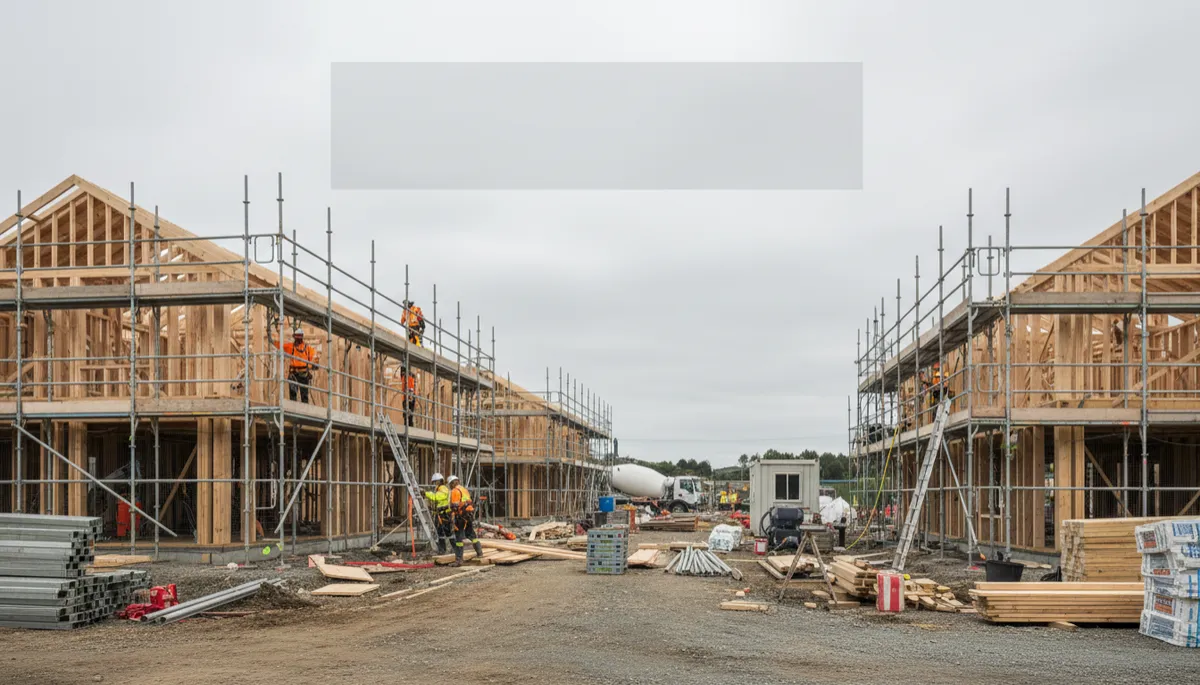
Announced on 15 September, WorkSafe NZ’s latest targeted inspection drive will run from October through December 2026, focusing on residential construction (housebuilding) sites across the country. The initiative forms part of a wider programme visiting high-risk workplaces, with inspectors also heading to beef and lamb farms to assess critical risks including falls, vehicles and remote work.
The construction focus is firmly on fall from height risks. Over the past two years, falls from height have accounted for approximately 70% of prohibition notices and 45% of enforcement notices issued in the New Zealand construction sector. These figures underscore why WorkSafe NZ is putting residential construction and construction safety under the microscope this spring.
What inspectors will look for on residential construction sites
WorkSafe has been clear that inspectors will assess how businesses manage critical risks and will actively discuss improvements with both workers and employers. Expect visits to be structured conversations, not just clipboard checks. Inspectors will want to see that PCBUs understand their duties, can identify fall hazards, and have effective controls in place for typical housebuilding activities such as framing, roofing, cladding and finishing work at height.
While the programme has a strong education and engagement focus, WorkSafe has also been explicit that inspectors will intervene where serious risks are not being controlled. That could mean improvement notices, prohibition notices, or in serious cases, prosecution. The recent enforcement history shows that ignoring a prohibition notice can lead to substantial fines, reputational damage and project disruption—costs that far exceed the investment required for robust height safety systems.
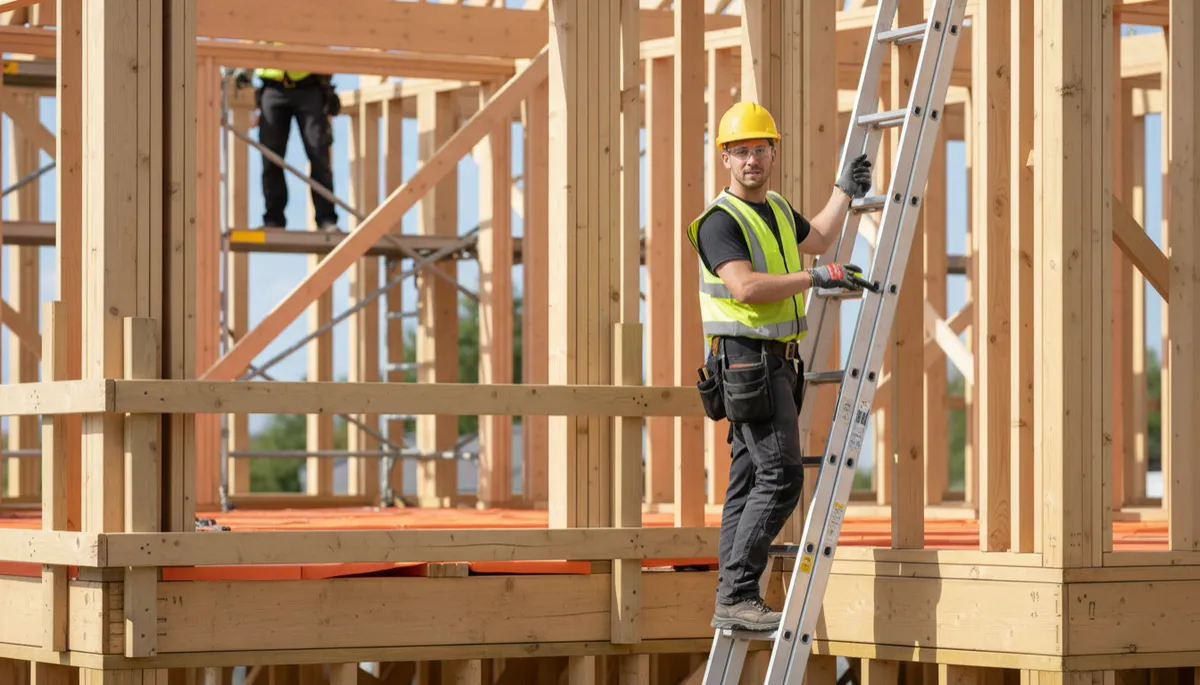
Well-planned access, safety decking and guardrails sharply reduce fall-from-height risk on builds.
Dynamic sites, real risks: ladders, trades and changing conditions
WorkSafe area manager Barney Hoskins has emphasised the challenge facing site leaders, noting that “Construction sites are dynamic environments, with multiple trades often working alongside each other.” For engineers, project managers and site managers, this means that a one-off risk assessment at the start of a build is not enough. As framing goes up, scaffolds are moved, and subcontractors come and go, fall hazards change daily—sometimes hourly.
Ladders remain a particular concern. WorkSafe data shows ladders are involved in about 40% of construction injuries caused by falls from height. Inspectors will expect ladders to be:
- used only for short-duration, low-risk tasks, not as primary work platforms
- secured at top and bottom, positioned on firm, level ground, and kept within safe working angles
- inspected regularly, removed from service if damaged, and clearly managed under site rules
Updated working-at-height guidance: what’s changed and what it means on site
Alongside the inspection programme, WorkSafe has revised its working-at-height guidance, adding material on risk management, safety decking and worker engagement. For site leaders, this reinforces several key expectations:
- Any potential fall—from any height—must be identified and managed, not just “high” work areas.
- Collective protection such as safety decking, guardrails, edge protection and scaffolds should be prioritised over personal protective equipment alone.
- Worker engagement is not optional—crews should be involved in planning access, selecting controls and reporting issues.
How site managers and engineers can prepare now
With inspections imminent, residential construction leaders in New Zealand—and Australian firms operating in the NZ market—should take a structured approach to preparation:
- Audit current sites: Walk every active housebuilding site and map all locations where a fall from height could occur—edges, openings, temporary platforms, ladders, roofs and stairwells. Verify that controls match the risk profile and are actually in use.
- Review procedures and documentation: Ensure your fall-from-height risk assessments, Safe Work Method Statements (SWMS), and toolbox talk records reflect current WorkSafe NZ guidance and site practices, not outdated methods or generic templates.
- Engage workers and subcontractors: Brief all trades on the upcoming site inspection programme and clarify expectations for working at height. Encourage them to raise concerns and suggest improvements—inspectors will be looking for genuine worker engagement.
- Invest in safer access systems: Where ladders are still routinely used for work, consider upgrading to mobile scaffolds, safety decks or work platforms. The cost is modest compared with lost time, ACC claims and potential enforcement action.
Turning inspections into an opportunity for safer, more efficient builds
The upcoming WorkSafe NZ site inspection programme is not just a compliance hurdle; it is an opportunity for residential construction businesses to reset their approach to fall from height risks. By proactively aligning with updated guidance on risk management, safety decking and worker engagement, project teams can reduce injuries, avoid costly enforcement notices and maintain programme certainty on busy build schedules.
For engineers, project managers, site managers and contractors, the message is clear: treat height safety NZ-wide as a critical design and planning issue, not an afterthought on site. Use the weeks before inspectors arrive to review, consult and improve. The payoff is a safer workforce, stronger compliance position and more resilient projects.
Call to action: Schedule a dedicated fall-from-height review for each residential project, involve your crews in identifying improvements, and embed those changes before WorkSafe NZ steps onto your site. Safer sites are not only a legal requirement—they are a competitive advantage in a demanding construction market.


