Trans-Tasman Construction Outlook 2026
Australia construction forecast, NZ construction 2026, infrastructure growth, critical minerals, data centre construction
Trans‑Tasman Construction Outlook 2026: Solid Growth, Tight Capacity, and a New Wave of Strategic Projects
Fresh forecasts for 2026 confirm that both Australia and New Zealand are entering a new expansion phase in construction, underpinned by housing, transport infrastructure, critical minerals and renewable energy—yet constrained by cost escalation, labour shortages and rapidly rising demand for AI‑ready data centre construction.
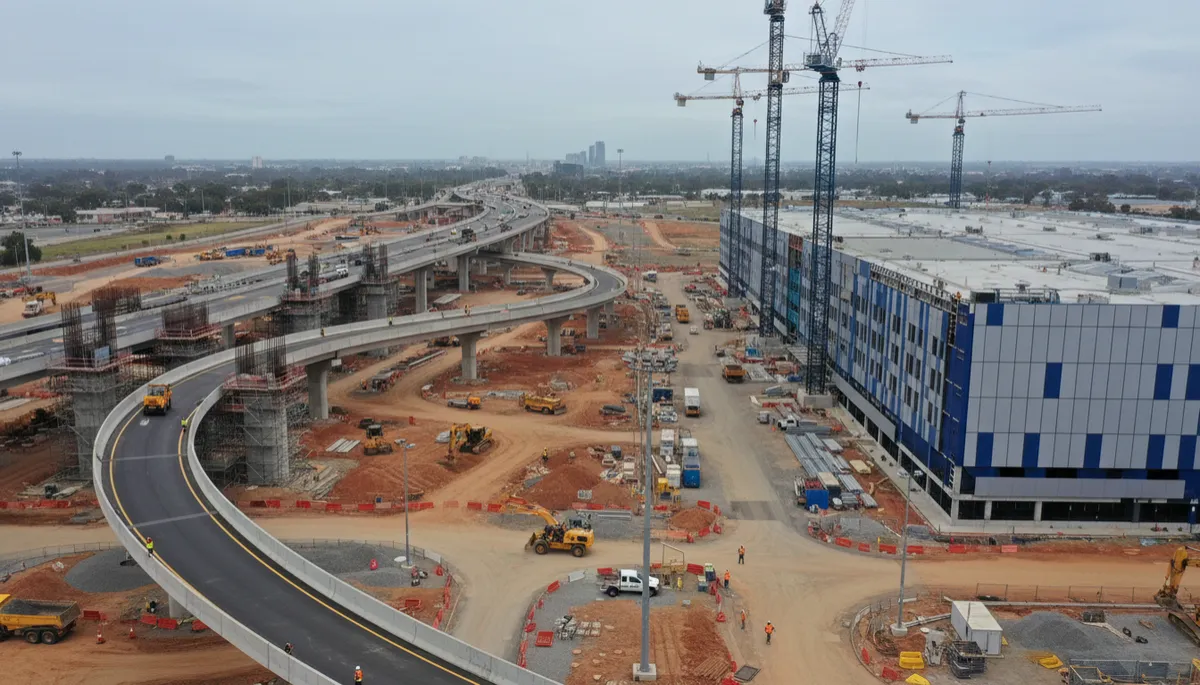
Australia: Housing Recovery, Infrastructure Spend and Critical Minerals Drive a 4.8% Lift in 2026
The Australia construction forecast released on 5 October 2026 points to a robust rebound. Australia’s construction industry is projected to expand by 4.8% in real terms in 2026, reversing the softer conditions seen in earlier ACIF projections and confirming that demand is now translating into on‑the‑ground activity for contractors and consultants.
A key driver is the residential sector. Dwelling approvals are up 7.8% year on year in the first four months of 2026, signalling that the housing pipeline is finally responding to chronic undersupply. For design engineers and project managers, this is feeding a steady stream of medium‑density and greenfield subdivision work, often tied to new transport and utilities upgrades at the urban fringe.
At the same time, total construction work completed rose 6.2% year on year in Q1 2026, confirming that the sector is not only winning work but also delivering at higher volumes. Engineering construction, particularly in transport, utilities and defence, remains a central pillar of this growth, consistent with earlier market intelligence from ACIF, Coates and Turner & Townsend that highlighted infrastructure and data centres as key engines of activity.
A landmark feature of the 2026 outlook is the AUD5 billion Australia–US partnership to invest in critical minerals and rare earth projects. Building on the 2025 bilateral framework and subsequent ministerial commitments (USA Embassy; US Department of Energy), this funding is accelerating mining, processing and associated infrastructure in Western Australia, Queensland and the Northern Territory. For civil, structural and process engineers, the pipeline includes new mines, concentrators, refineries, rail and port upgrades, and high‑voltage connections into the grid—each requiring sophisticated delivery models and ESG‑aligned design.
Looking beyond the immediate upswing, the market is expected to stabilise into a more sustainable growth path. From 2027 to 2030, average annual growth of 3.2% is projected, supported by three reinforcing trends:
- Rising private sector investment in residential and industrial projects, including logistics, advanced manufacturing and clean‑energy‑linked facilities.
- Ongoing government funding for housing and transportation infrastructure, with states continuing to roll out major road, rail and social infrastructure programs despite fiscal pressure.
- Expanding tourism‑driven commercial construction, particularly in hospitality, retail and aviation‑linked projects as inbound travel recovers.
New Zealand: Moderate 3.4% Growth with Strong Infrastructure and Renewable Energy Pipelines
Across the Tasman, the latest NZ construction 2026 outlook released on 1 October 2026 points to a more measured but still positive expansion. New Zealand’s construction industry is forecast to record 3.4% real growth in 2026, building on signs from MBIE and Turner & Townsend that the market has passed its cyclical low and is now stabilising from a subdued base.
On the demand side, building consent values rose 10.3% year on year in February 2026, indicating renewed confidence among developers and institutional clients. For consulting engineers and contractors, this is translating into a broader spread of work across residential, commercial and civil, albeit with continued margin pressure highlighted in BDO’s 2026 Construction Sector Report.
New Zealand’s public infrastructure pipeline remains the bedrock of activity. The NZD11 billion National Land Transport Programme is driving multi‑year upgrades to highways, bridges, public transport corridors and resilience works, particularly in regions affected by severe weather events. This is complemented by the NZD6.6 billion Auckland Airport terminal integration project, due for completion by 2029, which will reshape New Zealand’s primary gateway and create sustained demand for aviation, structural, building services and geotechnical expertise over the rest of the decade.
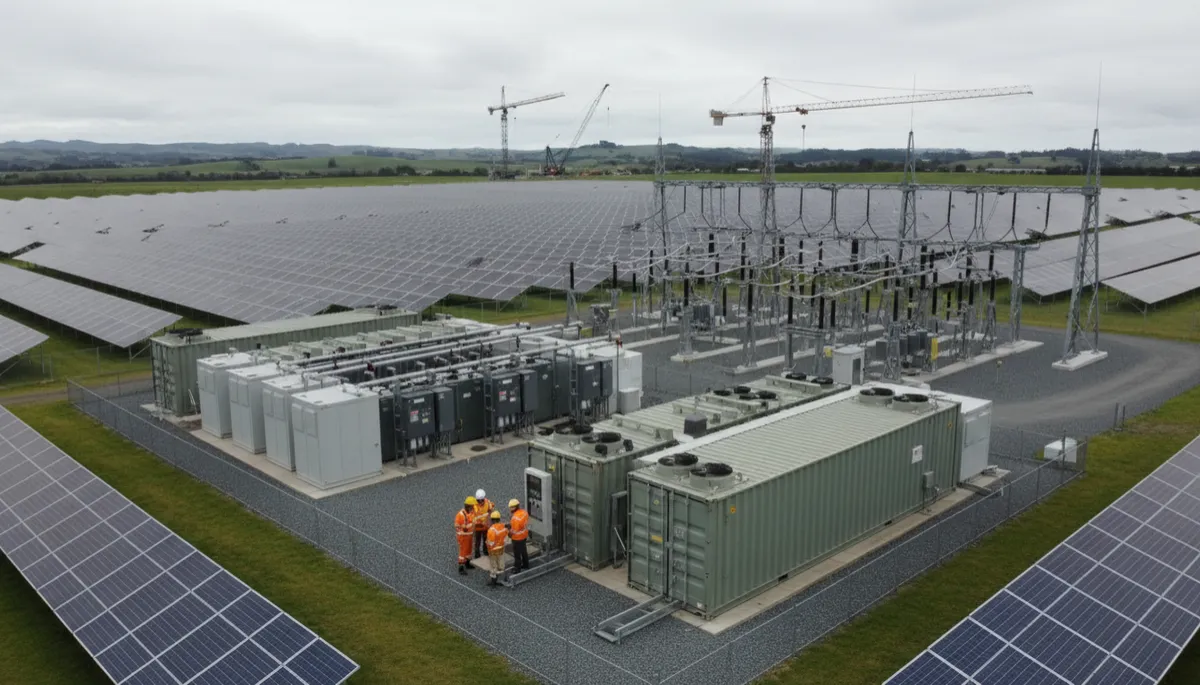
Renewable energy NZ projects like large solar and BESS assets are reshaping future grid and construction demand.
Energy is another major growth vector. Contact Energy’s NZD525 million renewable energy investment programme spans approximately 150 MW of solar PV, a 200 MW/400 MWh battery energy storage system, and geothermal expansion. These projects demand advanced electrical, civil and mechanical design, grid integration studies and complex construction staging to manage interfaces with existing assets and communities.
In parallel, the government has signalled a more assertive stance on resources. A push to accelerate mining approvals aims to unlock NZD3 billion in mineral export revenue by 2035. While still at an early stage, this shift opens opportunities for geotechnical, environmental and infrastructure specialists as new extraction and processing proposals move through feasibility and consenting.
Cross‑Cutting Themes: Data Centres, Critical Minerals, Cost Escalation and the Outlook to 2030
AI‑Driven Data Centre Construction and Critical Minerals
One of the fastest‑growing non‑residential segments in both markets is AI‑driven data centre construction. Hyperscale and colocation operators are racing to deliver capacity that can support AI workloads, high‑density computing and low‑latency services. For engineers, this means a sharp focus on resilient power supply, advanced cooling systems, fire engineering, and grid and fibre connectivity, often co‑located with renewable generation or near major substations to manage emissions and operating costs.
The data centre boom is closely linked to the critical minerals story in Australia. The AUD5 billion Australia–US partnership is not only about upstream mining; it also underpins the semiconductor, battery and technology supply chains that sit behind AI infrastructure. This creates a reinforcing loop of demand for industrial facilities, logistics hubs and transmission upgrades, deepening the infrastructure growth narrative across both countries.
Cost Pressures, Labour Constraints and the Brisbane 2032 Effect
Despite the positive volume outlook, labour and material cost escalation remains a pressure point across Australia and New Zealand. Recent analyses from WT, RLB and BDO highlight tender price inflation in the 5–6% range in many Australian cities, with New Zealand contractors also reporting eroded margins due to inflation, supply chain volatility and higher financing costs. Skills shortages—particularly in experienced site management, specialist trades and digital engineering—are prolonging programmes and forcing more selective bidding behaviour.
Nowhere are these pressures more visible than in Queensland, where the Brisbane 2032 Olympics is driving construction cost escalation of 7.2% in the state. Olympic‑related venues, transport upgrades and urban regeneration projects are absorbing capacity and pushing up prices, with spill‑over impacts felt across eastern Australia. For project managers operating nationally, this necessitates differentiated escalation allowances, robust procurement strategies and early contractor involvement to lock in key trades and materials.
Outlook for Engineers and Project Stakeholders
Taken together, the 2026–2030 outlook suggests a period of steady but capacity‑constrained growth for engineering professionals in both countries. In Australia, the combination of housing recovery, infrastructure pipelines, data centre construction and critical minerals investment underpins the projected 4.8% real growth in 2026 and 3.2% average annual growth through 2030. In New Zealand, a 3.4% lift in 2026, backed by transport programmes, Auckland Airport, renewable energy NZ projects and emerging mining activity, points to a more balanced but still opportunity‑rich environment.
Conclusion: Strategic Positioning in a Tight but Growing Market
For engineers, project managers and construction stakeholders in Australia and New Zealand, the message from the latest forecasts is clear: pipelines are strengthening, particularly in infrastructure, resources, data centre construction and renewables, but delivery risks are intensifying. Success over the remainder of the decade will hinge on disciplined project selection, realistic escalation and labour assumptions, and deeper collaboration between clients, designers and contractors to lift productivity and resilience. Those who can integrate digital tools, ESG outcomes and advanced risk management into their delivery models will be best placed to capture the next wave of trans‑Tasman construction growth.


