
Trans-Tasman Construction Growth by 2026
Fil Engineers Industry News, Trans-Tasman construction, NZ construction 2026, Australia construction forecast
Trans-Tasman Construction Hits a Turning Point: Australia and NZ Growth Forecasts Confirmed for 2026
Freshly released 2026 forecasts confirm that both Australia and New Zealand are moving out of the trough in their construction cycles, with infrastructure growth and data centre construction leading a new phase of on-the-ground activity.
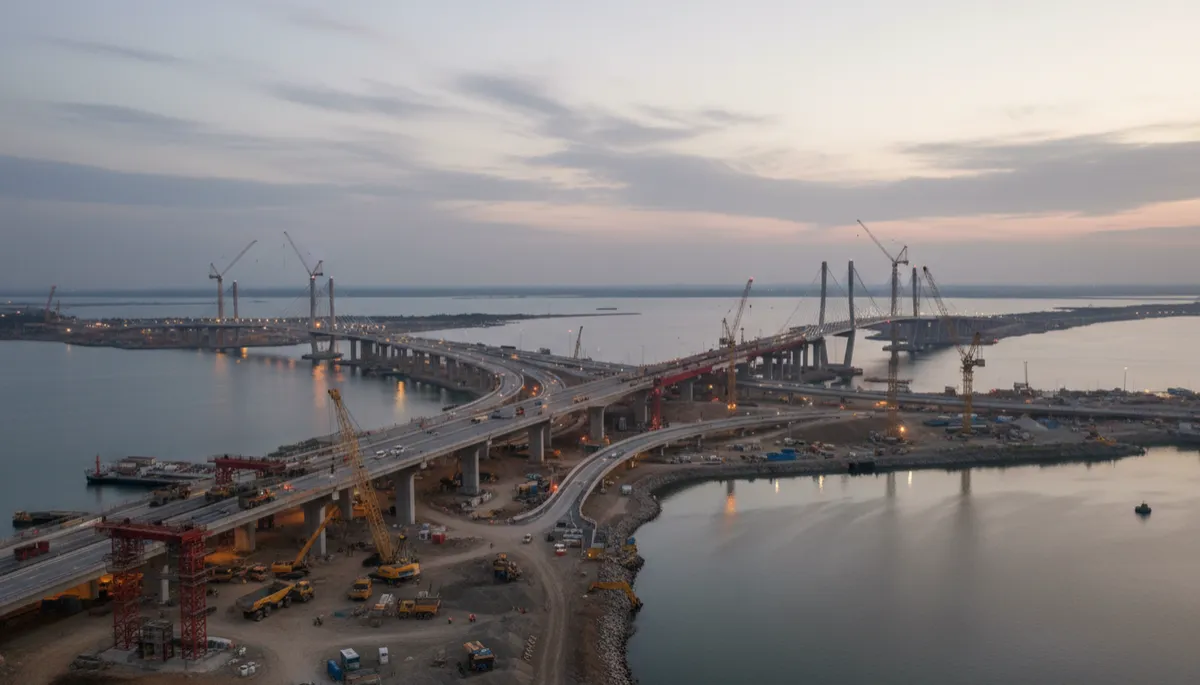
Forecasts signal a cyclical turning point on both sides of the Tasman
New numbers released in the last week confirm what many civil engineers and project managers have been sensing on the ground: 2026 is shaping up as a turning point for Trans-Tasman construction. According to the latest ACIF outlook, Australia’s construction sector is projected to expand by 4.8% in real terms in 2026 (forecast released 5 October 2026), reversing the softer conditions and flat profiles highlighted in earlier 2026 commentary from AIQS and ACIF. Demand that had been “stuck in the pipeline” is now forecast to translate into work done.
Across the Tasman, New Zealand’s construction industry is now expected to deliver 3.4% real growth in 2026 (outlook released 1 October 2026), reinforcing Research and Markets’ earlier projections of a multi‑year recovery. Building consent values are reported to be 10.3% higher year-on-year, a clear signal that the market has likely passed its cyclical low and is transitioning into a new expansion phase for NZ construction 2026.
AI-ready data centres: fastest-growing non-residential segment
Cutting across both markets, AI-ready data centre construction has emerged as the fastest-growing non-residential segment. Hyperscale operators, cloud providers and domestic enterprises are racing to secure capacity that can support AI workloads, high-density computing and stringent data-sovereignty requirements. For design managers and services engineers, this is reshaping non-residential pipelines away from traditional office and retail towards mission-critical, high-MEP-intensity facilities.
In both Australia and New Zealand, the early stages of a data centre construction buildout wave are evident in site acquisition, power augmentation works and enabling civil packages. Grid connections, substation upgrades, redundancy corridors and water management systems are becoming core civil scopes, with programme risk increasingly tied to energy and network approvals rather than pure construction duration. For contractors, this segment offers comparatively resilient demand against a backdrop of mixed office and retail outlooks.
Queensland: Olympic push and health investment drive escalation
Nowhere is the tension between opportunity and cost pressure more visible than in Queensland. Preparations for the Brisbane 2032 Olympic and Paralympic Games are feeding directly into the Australia construction forecast, with major transport, venue and precinct works driving demand for structures, civil works and building services. The latest cost intelligence points to 7.2% cost escalation in Queensland in 2026, a rate well above national averages and a critical input for estimators and commercial managers repricing multi-year frameworks.
Running alongside the Olympic pipeline is the AU$18.5 billion Queensland Hospital Rescue Plan, which is now firmly in delivery mode. New hospitals, expansions and enabling infrastructure are competing for the same trades, suppliers and professional services as transport and event projects. For project directors, this convergence of health and Olympic work is intensifying labour and materials competition, compressing float and increasing the importance of early procurement, alliance-style collaboration and realistic escalation allowances in business cases.
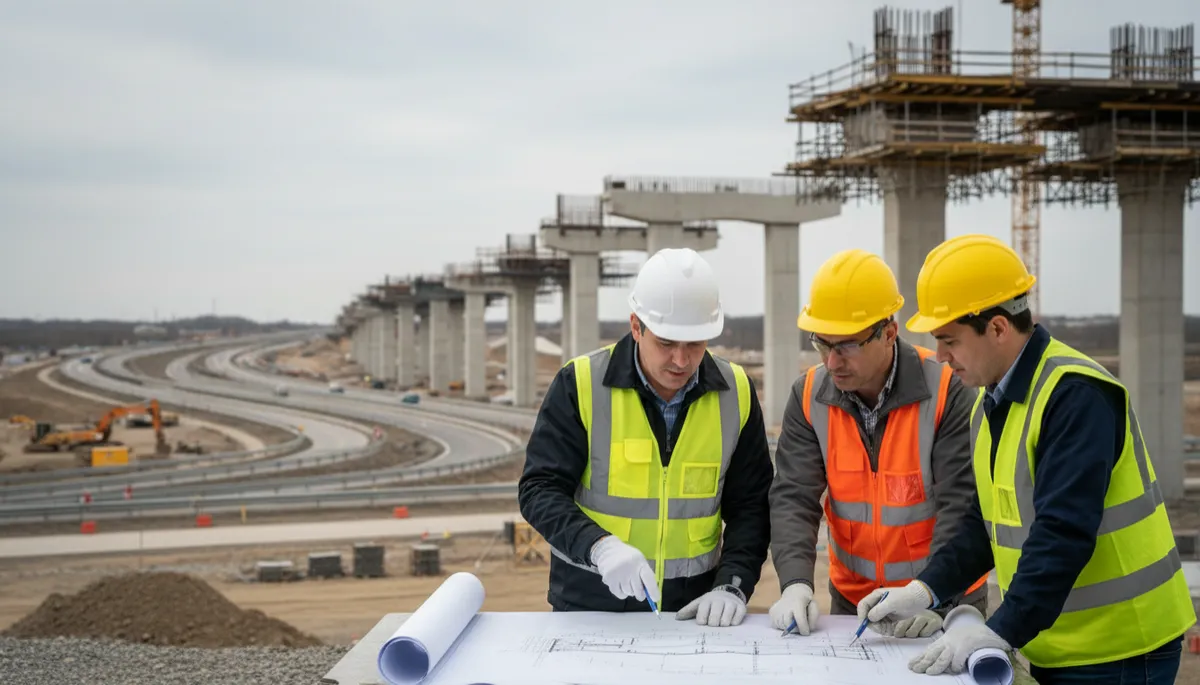
Intensifying infrastructure pipelines are forcing teams to rework sequencing, procurement and risk allowances.
Inland Rail and NZ highways: earthmoving at scale
In Australia’s heavy infrastructure space, the Inland Rail programme continues to underpin workloads. The Illabo–Stockinbingal section in New South Wales reached a tangible milestone in early October 2026, with the first new track laid at Stockinbingal and almost 75% of required rail already delivered to site. For civil contractors, this marks the shift from preparatory works to visible progress, locking in demand for track construction crews, ballast supply, formation works and associated structures over the next several years.
On the New Zealand side, the NZD 11 billion National Land Transport Programme (2024–2034) is now fully mobilised, with millions of cubic metres of earth being moved on new highways, safety upgrades and resilience projects. For practitioners in Trans-Tasman construction, the scale of this programme is reshaping plant utilisation, haulage logistics and geotechnical risk management. With civil cost inflation running higher than vertical building costs, accurate production rates, haul distances and ground-condition allowances are becoming decisive in tender outcomes.
Skills shortages: the binding constraint on delivery
Despite improving growth profiles, both markets face a common, structural challenge: skills shortages remain a critical constraint. Australian modelling continues to point to six-figure shortfalls across trades, engineering and supervisory roles, while New Zealand’s contractors report persistent difficulty filling site engineer, foreperson and specialist civil positions, even as activity recovers. The result is longer recruitment lead times, heavier reliance on temporary migration and escalating wage pressures that feed directly into project budgets.
For project managers and construction professionals, this environment elevates the importance of productivity and constructability. Teams are accelerating adoption of digital planning tools, modular and offsite solutions, and lean construction practices to deliver more with constrained headcount. At the same time, owners and government clients are being forced to prioritise and phase their pipelines, recognising that not every project can be delivered simultaneously within current labour and supply limits.
What this means for 2026–2030 project pipelines
Taken together, the latest Australia construction forecast and NZ construction 2026 outlooks point to a more positive medium-term environment for civil engineers and construction professionals, even as near-term delivery risks remain elevated. Data centres, health and transport infrastructure are set to anchor workloads, while residential and conventional commercial sectors stabilise from recent volatility. For Trans-Tasman businesses, the opportunity lies in aligning capability with these growth corridors and actively managing exposure to overheated sub-markets such as Olympic-related works in Queensland.
Over the next four to five years, success will hinge on disciplined bid selection, realistic escalation and labour assumptions, and strong collaboration across the supply chain. With growth now confirmed in both Australia and New Zealand for 2026, the question for the industry is less about whether work will be available, and more about how effectively we can deliver the infrastructure growth now locked into the Trans-Tasman construction pipeline.
SEO metadata
Meta title: Trans-Tasman Construction Hits a Turning Point: Australia and NZ 2026 Growth Forecasts
Meta description: Fresh October 2026 forecasts show Australia and New Zealand construction returning to real growth in 2026. Explore Trans-Tasman construction outlooks, data centre construction, Brisbane 2032 impacts, Inland Rail, New Zealand’s National Land Transport Programme and the skills shortages shaping project delivery.


