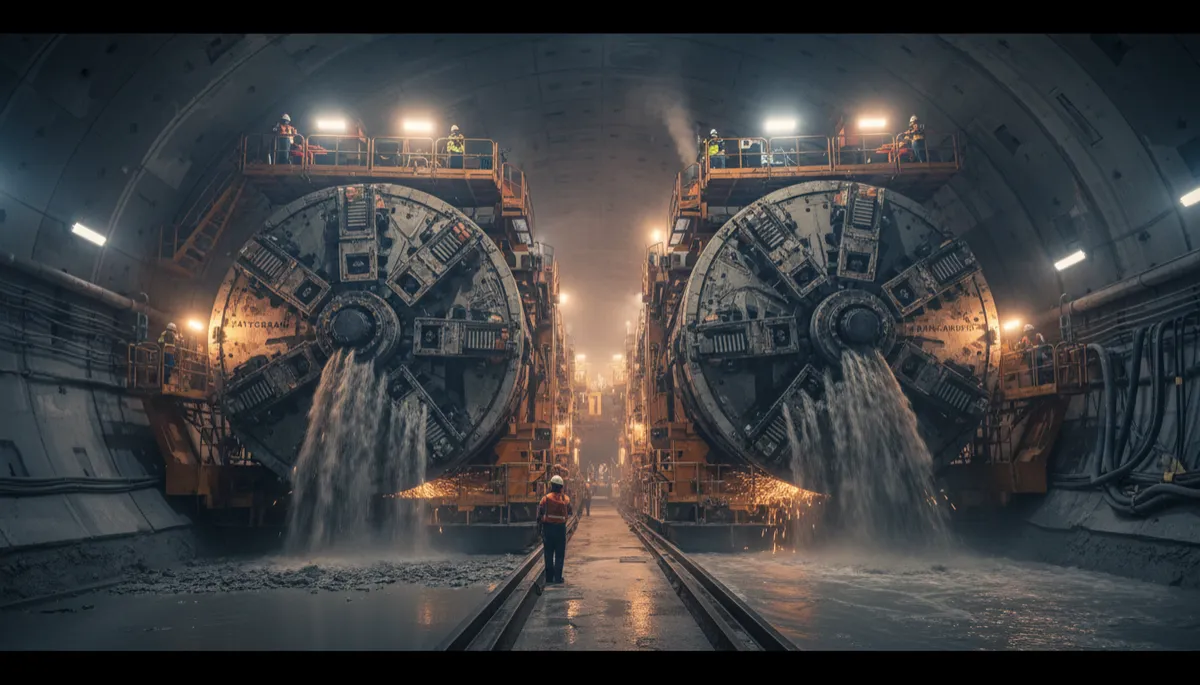
Record-Breaking TBMs Under Sydney Harbour
Infrastructure, Western Harbour Tunnel, Construction Engineering
Record-Breaking TBMs Drive Final Push Under Sydney Harbour: The Engineering Story of October 2026
Two of the most powerful tunnel boring machines ever built are now executing the final 1.5 km drive beneath Sydney Harbour, marking a decisive moment not just for the Western Harbour Tunnel, but for construction engineering capability across Australia and New Zealand.
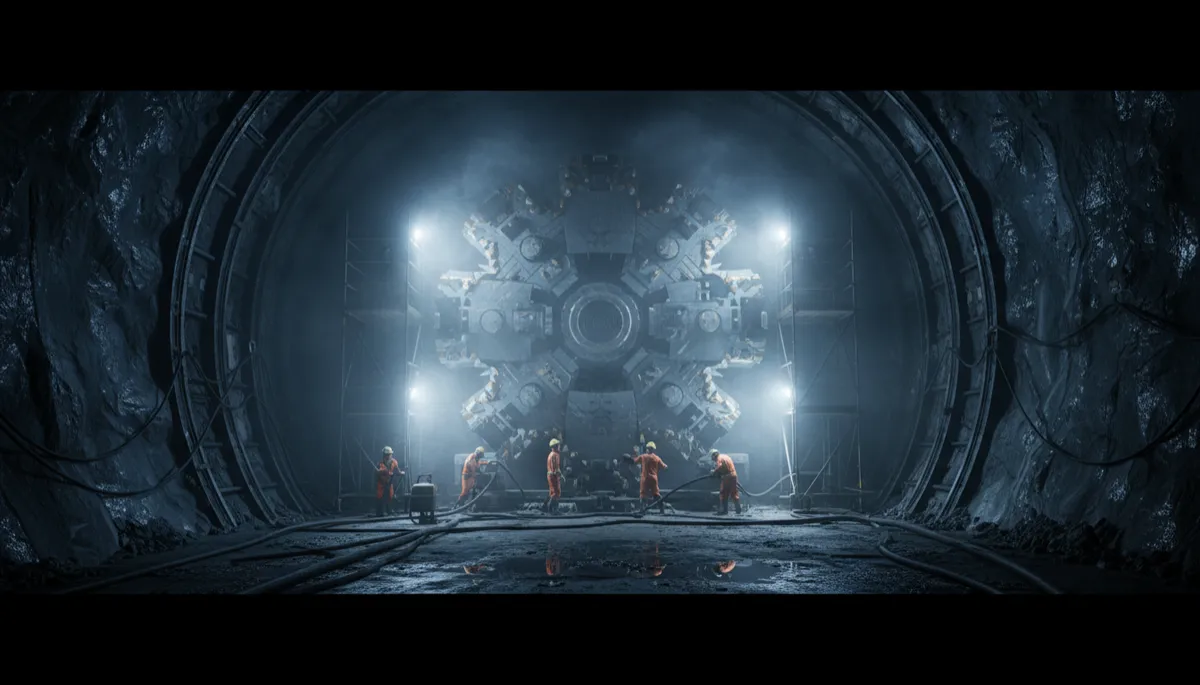
Twin giants under Sydney Harbour: scale with strategic intent
Patyegarang and Barangaroo, each weighing 4,350 tonnes, are now simultaneously excavating the final stretch of the Western Harbour Tunnel beneath Sydney Harbour, approximately 44.7 metres below Birchgrove Oval. At 15.7 metres in diameter and 137 metres in overall length, they are the largest tunnel boring machines ever assembled underground, and the largest TBMs ever deployed in the Southern Hemisphere. This is not incremental progress; it is a step change in what the region’s tunnelling industry can credibly deliver under complex marine and urban conditions.
Patyegarang launched in June 2026, followed by Barangaroo in August 2026. Both TBMs now run around the clock with crews of roughly 40 workers per shift, driving twin 1.5 km motorway tubes that will complete the 6.5 km Western Harbour Tunnel — Sydney’s first new road harbour crossing in more than 30 years, targeted to open in 2028. For engineering teams across Australia and New Zealand, this represents a live reference project in mega-TBM deployment, marine ground risk management, and high-intensity workforce logistics.
Systems engineering underground: segments, slurry and throughput
The headline dimensions of each tunnel boring machine only tell part of the story. The engineering performance of the Western Harbour Tunnel drives depends on an integrated production system stretching from precast yards in Western Sydney to real-time slurry treatment beneath the harbour. As Patyegarang and Barangaroo advance, they install approximately 13,000 precast concrete segments, manufactured at Emu Plains, to form the tunnel lining. This volume demands tightly controlled quality, just-in-time logistics, and resilient supply chains — disciplines that will be directly transferable to future long-span road, rail and energy tunnels across the region.
Equally significant is the record-breaking underground slurry treatment plant that supports each tunnel boring machine. Capable of pumping and processing up to 3 million litres of slurry per hour per machine, this facility is an engineering first for Australia and, by current accounts, for the world. Locating such high-capacity treatment infrastructure underground reduces surface footprint and community impact, but it also raises the bar on mechanical reliability, maintainability, and monitoring in constrained environments. For construction engineering professionals, this is a case study in how to treat muck handling and spoil logistics as core design drivers rather than afterthoughts.
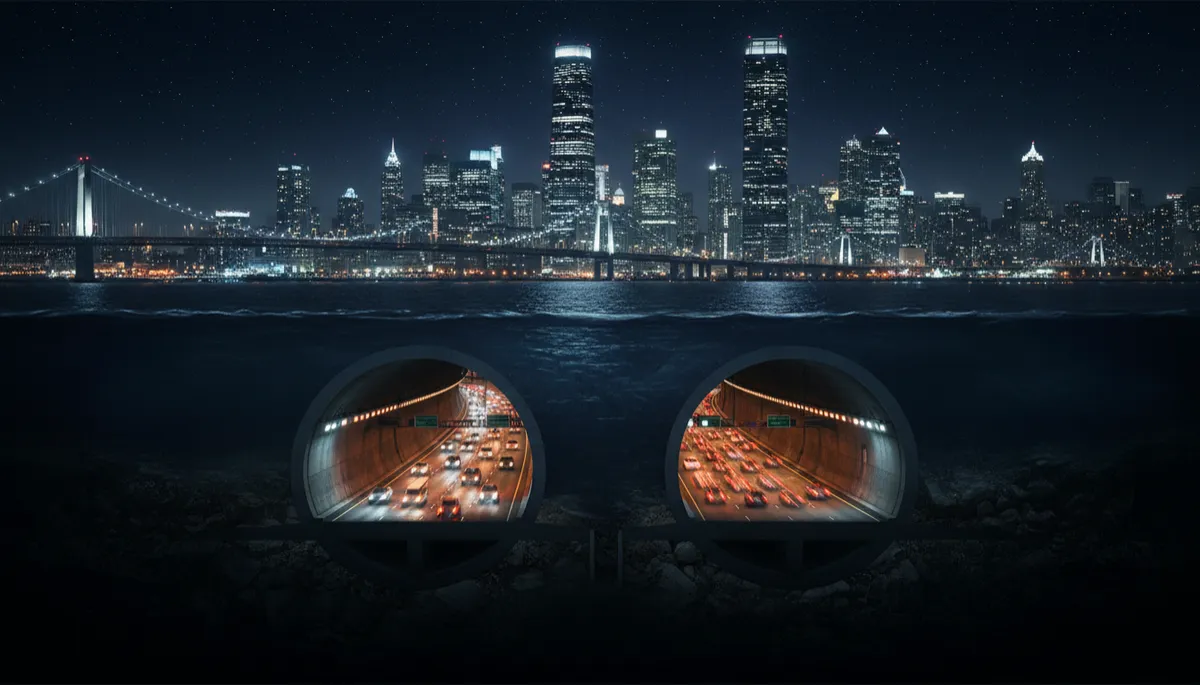
The Western Harbour Tunnel will divert 17% of traffic from the Sydney Harbour Bridge.
Network performance, jobs and capability building
When the Western Harbour Tunnel opens in 2028, it is expected to reduce traffic on the Sydney Harbour Bridge by around 17%, with additional relief on the Western Distributor and existing Sydney Harbour Tunnel. For network planners, that is a structural rebalancing of cross-harbour flows, improving resilience and journey time reliability for freight and commuters. For engineers, the more important story sits behind the traffic models: the project currently supports about 7,000 jobs, many of them in specialised tunnelling, geotechnical, mechanical and electrical disciplines that are in short supply across Australia and New Zealand.
Operating two mega-TBMs simultaneously under Sydney Harbour demands a deep bench of skills — from slurry shield TBM operators and segment erector crews to control room technicians and maintenance engineers familiar with high-pressure, mixed-ground conditions. The knowledge being accumulated in these teams will be directly relevant to upcoming cross-harbour, metro, pumped hydro and long-haul transmission projects across the region. Firms that are actively seconding staff, rotating supervisors, and documenting lessons learned on this tunnel boring machine campaign will emerge with a tangible competitive advantage in Australia infrastructure 2026 and beyond.
Procurement and risk: implications for future mega-projects
From a procurement perspective, the Western Harbour Tunnel demonstrates how early commitment to high-specification TBMs and associated plants can de-risk later stages of delivery. Designing and assembling the largest tunnel boring machine ever used in the Southern Hemisphere underground required close integration between client, OEMs, and contractors. That integration is now paying dividends as the project navigates variable geology, high water pressures and tight urban interfaces without the delays that have plagued other global harbour crossings.
For future major infrastructure projects, especially those involving marine crossings or deep urban tunnels, three procurement lessons stand out. First, mega-TBM capability should be treated as a strategic asset for the region, with frameworks that encourage reuse and refurbishment across multiple projects. Second, long-lead items such as segment moulds, slurry pumps and electrical systems must be locked in early to buffer global supply volatility. Third, contractual models need to recognise the intertwined nature of design, construction engineering and operations for complex tunnel boring machine drives, rewarding collaborative problem-solving rather than rigid risk transfer.
Positioning within Australia’s 2026 construction cycle
The timing of this tunnelling milestone is notable. It comes against a backdrop of an anticipated 4.8% growth in Australia’s construction industry in 2026, supported by a pipeline that includes the Brisbane 2032 Olympics, large-scale data centre construction and ongoing investment in transport and utilities. While forecasts vary by source and segment, the clear signal for practitioners is that demand for complex underground and heavy civil capability will remain elevated across the decade, even as some traditional building sub-sectors soften.
For engineering consultancies, contractors and suppliers in both Australia and New Zealand, the Western Harbour Tunnel therefore functions as both a flagship reference and a training ground. It validates that the region can design, procure and operate world-scale slurry shield tunnel boring machines under a busy harbour, manage record-breaking underground slurry treatment plants, and coordinate thousands of workers across a multi-year, multi-stakeholder program. Those credentials will be central when bidding for Olympic-related transport links, cross-city tunnels, and the high-reliability power and data infrastructure that underpins new data centres.
Lessons for the next generation of harbour crossings
As Patyegarang and Barangaroo grind through the final metres beneath Sydney Harbour, the technical story is already clear. Mega-TBMs, when paired with high-capacity underground slurry treatment and disciplined segment supply chains, can deliver harbour tunnels with reduced surface disruption and predictable progress. For professional engineers and project managers, the Western Harbour Tunnel should be read as a template: invest early in integrated systems engineering, treat TBM operations as a network asset rather than a one-off tool, and deliberately use each project to lift regional capability.
The October 2026 push under Sydney Harbour is therefore more than a construction milestone. It is a signal that Australia and New Zealand’s construction engineering community is ready to execute the next generation of complex underground infrastructure — from harbour crossings to deep energy storage and resilient digital backbones — with confidence grounded in proven, record-breaking performance.


