
NZ Construction Rebound Amid Australian Uncertainty
Construction, NZ construction rebound, Australian construction, Infrastructure pipeline
NZ Construction Rebound Signals Turning Point – With Australia Sending Mixed Signals
After nearly three years of contraction, New Zealand’s construction sector is finally moving out of reverse, with fresh data pointing to a genuine rebound just as parts of the Australian market start to lose a little momentum. For engineers, contractors, and construction businesses on both sides of the Tasman, the story in late 2026 is less about boom or bust – and more about how to position for a very different, more selective phase of growth.
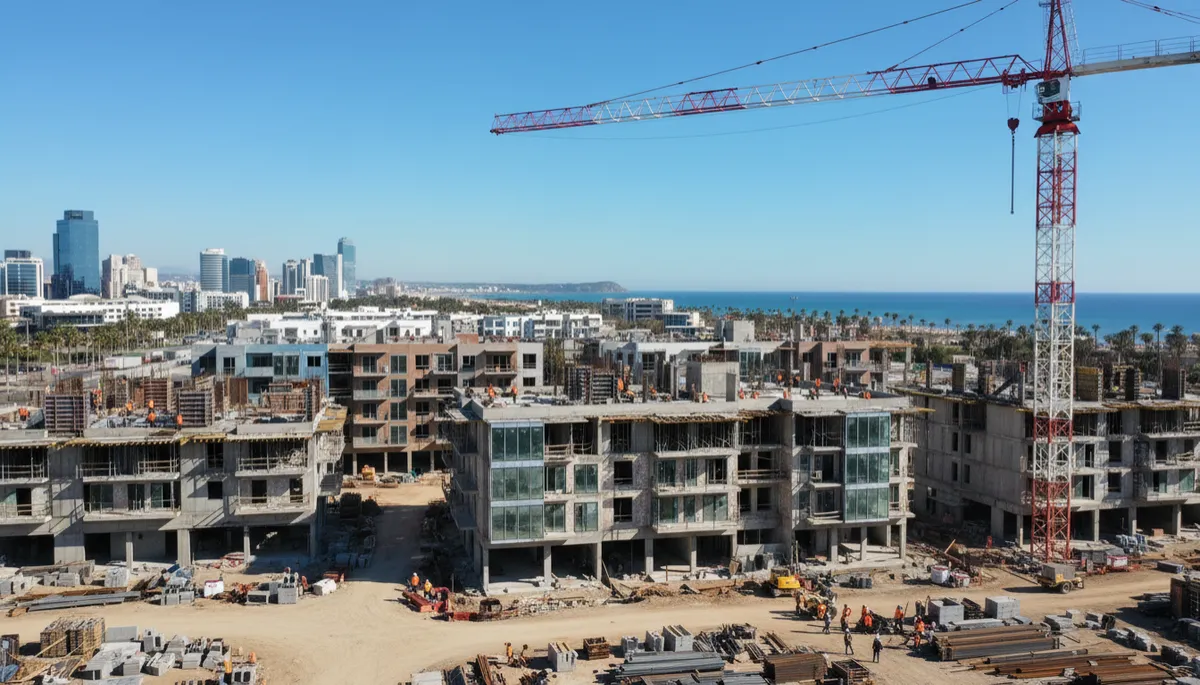
New Zealand: From Deep Downturn to Measured Rebound
The headline for New Zealand is simple: the NZ construction rebound is now backed by hard data, not just optimism. According to Stats NZ and recent Newstalk ZB reporting, the sector shrank a brutal 11.9% between December 2023 and March 2026, and is still about 11.1% smaller than it was at the end of 2023. But the direction of travel has clearly changed.
Seasonally adjusted building activity in the June 2026 quarter jumped 6% on March, the strongest lift since mid‑2023, even though volumes remain 10.6% below the December 2023 peak. Construction was the largest positive contributor to GDP, growing 2.7% in the quarter and helping push national GDP up 0.2% overall. Residential work led the way, but non‑residential also posted gains, with Canterbury hitting a record $1.439 billion of work and Waikato overtaking Wellington in quarterly value.
On the labour side, around 192,500 workers were employed in construction as of July 2026 – up 2.6% since the start of the year, though still 8.4% below the November 2023 peak of 210,200. That combination of rising employment and lingering spare capacity is giving firms some breathing room to rebuild teams without immediately hitting pre‑downturn constraints and wage spikes.
Pipelines, Consents and Confidence: Why This Rebound Looks Stickier
The rebound is also visible further up the pipeline. Nationwide building consents are now 7.7% higher than the March 2024 low point, even if they remain 8.9% below September 2023 levels. Quarterly consent numbers have been climbing steadily, with Q2 2026 up 10.5% on Q1, pointing to a healthier workload profile into 2027 for both vertical and horizontal construction teams.
Sentiment is finally catching up. Master Builders CEO Ankit Sharma reports that most Master Builders members now see a strong or steady pipeline, with improved business and consumer confidence compared with 2024. The latest Master Builders and Kennards Hire confidence checks show nearly 80% of leaders describing conditions as stable, and more than 80% expecting growth over the next five years – with housing demand, private investment and infrastructure all cited as key drivers.
Critically, the National Construction Pipeline Report now projects total NZ construction activity climbing to around $65.4 billion by 2030. Multi‑unit housing and infrastructure are expected to do the heavy lifting, supported by state housing delivery, earthquake‑prone building reforms, and incremental consenting and self‑certification changes designed to reduce friction in the system.

Rebuilding pipelines is shifting focus from survival work to strategic project selection.
Australia: Record Completions, But a Softer Future Pipeline
Across the Tasman, the Australian construction story is more nuanced. Engineers Australia’s latest quarterly update, drawing on ABS data, shows the value of work completed in the March 2026 quarter rising 7.1% on the previous quarter and 5.2% year‑on‑year. The private sector surged 15.9%, while public‑sector work slipped 3.5%, underscoring how strongly private capital – particularly in industrial, commercial and data centre assets – is driving activity.
Engineering construction is completing work at record levels, but new project commencements are falling, raising red flags about the medium‑term infrastructure pipeline. WT’s Market Conditions Report still highlights Sydney’s infrastructure backlog and Melbourne’s industrial and education sectors as relatively resilient pockets, yet national ABS figures for the June quarter already show total construction work done edging down 2.1% and engineering work off 6.0%.
At the same time, Australia is grappling with an estimated 83,000‑tradie shortfall in residential construction, rising capital expenditure, and softening building approvals. That combination of high delivery pressure, limited labour and weakening approvals suggests that, unlike New Zealand’s broad‑based rebound, Australia is heading into a more uneven phase where capacity management and project selection will be critical.
What It Means for Engineers, Contractors and Construction Businesses
For practitioners, the message is clear: the market is turning, but it is not turning evenly. In New Zealand, the NZ construction rebound is strongest in multi‑unit housing, regional infrastructure and high‑growth centres like Canterbury and Waikato. Contractors and consultants who can package design, delivery and compliance efficiency – particularly around consenting and earthquake‑prone upgrades – are well placed to capture this next wave of work as building activity and building consents continue to recover.
In Australia, the opportunity set is more segmented. Structural engineers, civil contractors and project managers tied into Sydney’s transport and utilities programs or Melbourne’s industrial and education pipelines should still see solid workloads, even as national engineering commencements soften. But firms heavily exposed to greenfield residential or reliant on public‑sector engineering work may face a tougher tender environment and increased competition for fewer new starts.
Across both markets, the common threads are margin pressure, labour constraints and delivery risk. Those who invest now in planning, digital coordination, modular and off‑site methodologies, and tighter cost control will be better equipped to navigate volatile input prices and evolving regulatory settings – from New Zealand’s self‑certification schemes to Australia’s new building and practitioner standards.
Construction Outlook 2026–2027: Cautious Optimism, Selective Growth
Looking ahead, the construction outlook 2026 and into 2027 is cautiously positive for New Zealand and more mixed for Australia. In NZ, rising GDP contribution, improving employment, stronger pipelines and a projected climb to $65.4 billion in total activity by 2030 all point to a sustained recovery – provided inflation in civil costs moderates as forecast and policy reforms continue to chip away at delays and compliance bottlenecks.
In Australia, the next 12–18 months are likely to be defined by the run‑off of today’s record engineering workload, patchy approvals, and the sector’s ability to attract and retain skilled trades and professionals. Firms that secure positions on long‑term frameworks, major precincts and social infrastructure programs will be better insulated from cyclical swings than those reliant on one‑off projects or discretionary private developments.
For engineers, contractors and construction businesses across the Tasman, the challenge now is not simply surviving a downturn – it is re‑gearing for selective growth: choosing the right sectors, shoring up capability, and partnering early with clients to de‑risk delivery. The downturn may not be entirely over, but the balance of evidence in late 2026 suggests the cycle has turned, and those who move early will be best placed to benefit as the next wave of projects comes through.
Meta Title: NZ Construction Rebound and Australian Construction Outlook 2026–2027
Meta Description: An in‑depth look at the NZ construction rebound, contrasting Australian construction trends, and what shifting pipelines mean for engineers, contractors and construction businesses through 2026–2027.


