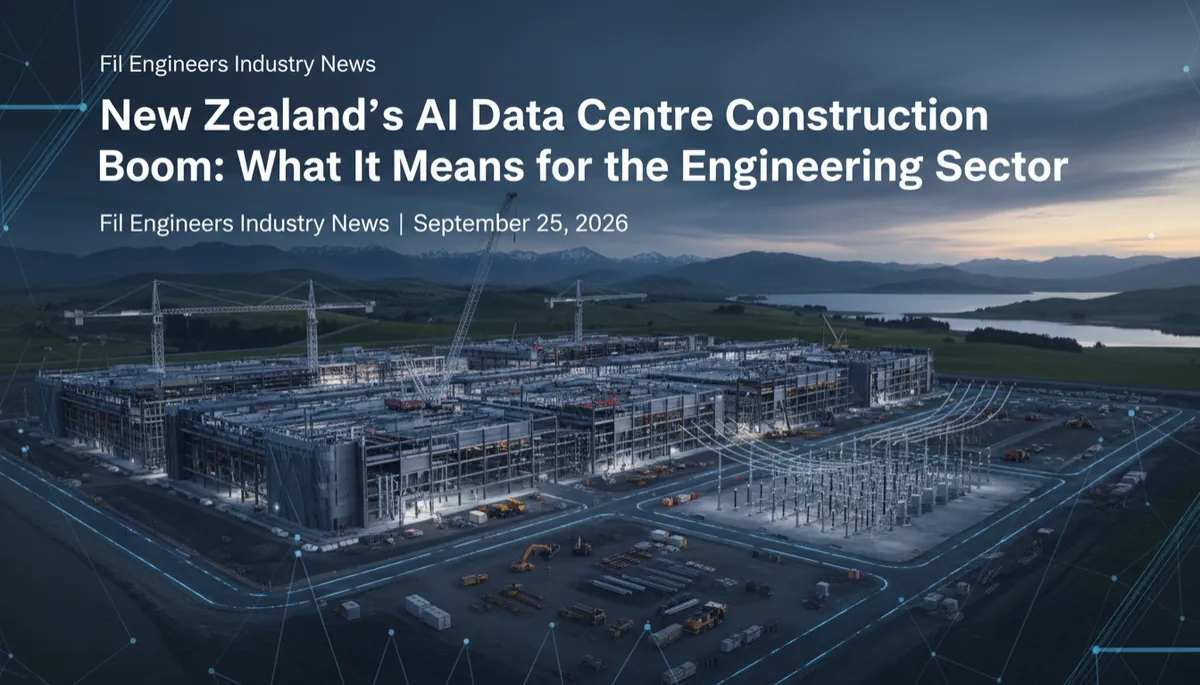
NZ's AI Data Centre Boom: Engineering Impact
Industry News, NZ construction, AI data centre, New Zealand engineering
New Zealand's AI Data Centre Construction Boom: What It Means for the Engineering Sector
New Zealand is entering a decisive phase in its digital infrastructure build-out, with AI data centres reshaping construction pipelines from Southland to Auckland. For engineering and construction professionals across NZ and Australia, this surge represents both a technical challenge and a generational opportunity.
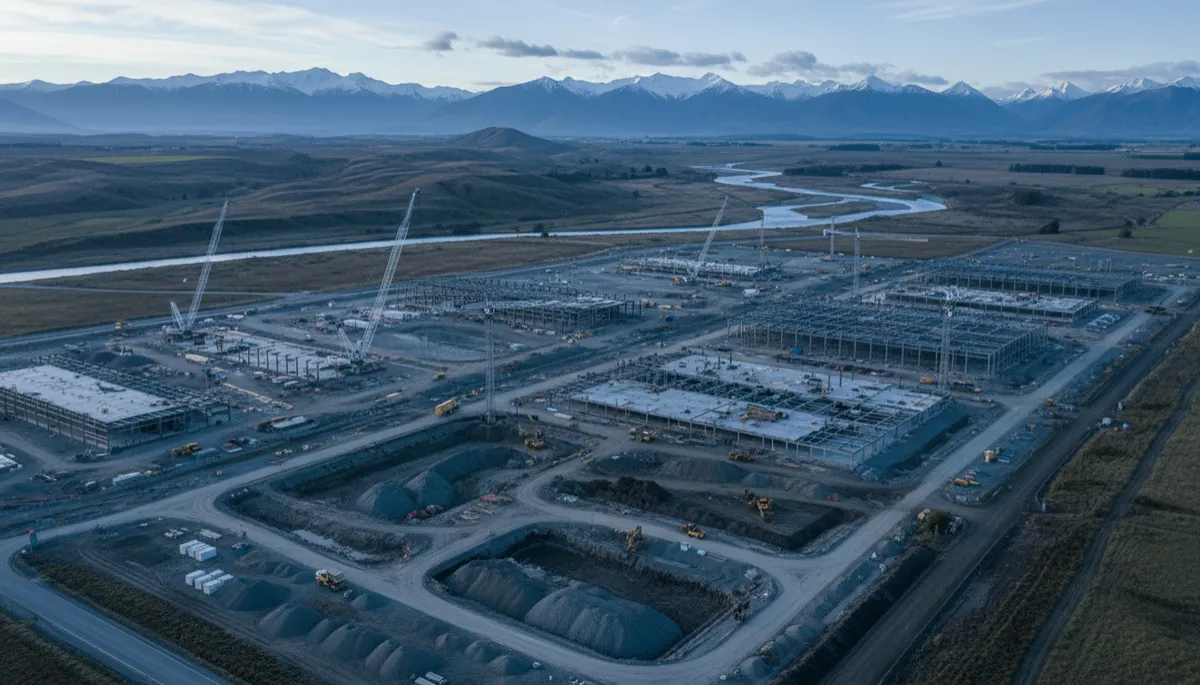
Datagrid Southland: New Zealand’s First AI “Factory”
The headline development is Datagrid’s Makarewa campus in Southland, billed as New Zealand’s first dedicated “AI factory.” The Singapore-based developer has commenced construction on a NZ$3.5 billion, 78,000 m² hyperscale AI data centre on a 49‑hectare site just north of Invercargill, following full resource consent in March 2026 (Invercargill City Council, Southland District Council, Environment Southland).
Early works began on 19 August 2026, with HEB Construction (part of VINCI Construction) delivering access roads to State Highway 98, a 6‑metre earth bund, and the foundation platform for the main facility, cable landing station, and grid‑exit substation. These enabling works are targeted for completion by the end of 2026, setting up a multi‑year vertical construction programme that will peak at an estimated 3,500 workers in 2029–2030.
At 280 MW in its first stage, scaling up to a potential 1 GW, the Datagrid Southland AI data centre will become New Zealand’s second‑largest electricity user after the Tiwai Point aluminium smelter, accounting for around 6% of national demand. Datagrid CEO Rémi Galasso describes it as “not just the largest data centre project in New Zealand, but also one of the most sustainable data centre projects of that scale in the Asia Pacific,” supported by Southland’s cool 9.8 °C average temperature and proximity to existing high‑capacity transmission lines originally built for Tiwai Point.
Sustainability, Regulation, and the Tasman Ring Network
The Makarewa project is more than a single data hall. It anchors the Tasman Ring Network, a new subsea cable system linking Invercargill to Australia, giving AI workloads in Southland low‑latency access to trans‑Tasman markets. For engineers, this means tightly integrated packages of civil, marine, power, and digital infrastructure, all subject to increasingly stringent regulatory expectations on energy and water use.
Political scrutiny has intensified as AI data centres grow in scale. The National‑led government now expects major data centres to be backed by “new, firmed generation” rather than leaning solely on existing grid capacity. Labour’s AI policy similarly calls for developers to secure additional renewable supply, pay connection costs, manage peak demand, and minimise water use, while the Green Party has gone further, proposing a temporary moratorium on new AI data centres above 50 MW. Against this backdrop, Mercury’s 12.7% equity stake in Datagrid and its 140 MW power purchase option are important signals of how energy “additionality” will be delivered in practice.
AWS Auckland and the Emerging National Data Centre Network
While Southland captures current headlines, Auckland remains the country’s core cloud hub. Amazon Web Services’ NZ$7.5 billion investment in the AWS Asia Pacific (Auckland) Region, which opened in September 2025 with three Availability Zones, is one of New Zealand’s largest digital infrastructure commitments. AWS estimates the region will contribute around NZ$10.8 billion to GDP and support roughly 1,000 jobs annually over its 15‑year investment horizon, with advanced AI services such as Amazon Bedrock now live in the region.
Beyond AWS, CDC Data Centres already operates three Auckland sites with a combined 98 MW of capacity, while a proposed 250 MW facility in Stratford, Taranaki—backed by Contact Energy and CDC—remains in the planning stage. According to Transpower, 30 separate data centre connection enquiries were on the books by July 2026, nearly double the 16 recorded in 2023. Together, these developments point to a national ecosystem of AI and cloud facilities, rather than isolated one‑off projects.

Multidisciplinary engineering teams are now central to delivering hyperscale AI data centre projects.
A Fragile but Rebounding NZ Construction Landscape
The AI data centre surge is arriving at a pivotal moment for NZ construction. After several years of contraction, industry activity is beginning to stabilise, with construction job listings up around 35% year‑on‑year to March 2026. However, margins remain tight and capacity uneven across regions, making pipeline visibility critical for firms considering re‑investment in people and plant.
Across the Tasman, Australia’s engineering construction sector is already operating at record levels. ABS data shows total engineering work done up 7.1% in the March 2026 quarter, underpinned by energy, resources, and transport infrastructure. For trans‑Tasman firms, this dual‑market context matters: capacity deployed into New Zealand’s data centre construction wave will be competing directly with strong Australian demand for the same engineering skills and specialist contractors.
Why AI Data Centres Are Different: Complexity and Risk
For engineering firms, AI data centres are not simply “big sheds with racks.” They are among the most technically complex building types currently being delivered. Each project requires precise integration of civil works, structural design, high‑density power distribution, advanced mechanical and HVAC systems, and resilient digital networks—often on compressed programmes with global technology partners and strict uptime requirements.
Disciplines in highest demand include structural and civil engineering for large‑format platforms and bunds; electrical engineering for 100 MW‑plus connections, backup systems, and on‑site substations; mechanical and HVAC specialists for free‑air and liquid cooling; and geotechnical engineers for ground improvement and resilience. Environmental and acoustic specialists are increasingly pulled into the core delivery team as consents come under closer public and regulatory scrutiny, as seen in Southland where requests to review Datagrid’s water‑take and noise conditions have already tested the robustness of the consenting framework.
Strategic Implications for NZ and Australian Engineering Firms
New Zealand Trade and Enterprise estimates NZ$25–35 billion of private investment across data centres, renewables, fibre, and transmission over the next five years, while Boston Consulting Group suggests data centre investment alone could unlock up to NZ$70 billion in economic activity over the coming decade. With the electricity system targeting 95% renewable generation by 2028, New Zealand is positioning itself as a preferred location for sustainable AI infrastructure within the wider Asia–Pacific region.
For firms like Fil Engineers and their peers, several strategic themes are emerging:
- Specialisation in high‑density power and cooling: Building capability in 280 MW‑plus connection design, substation integration, and advanced cooling (including natural free cooling and water‑efficient systems) will be a key differentiator in AI data centre construction.
- Integrated digital delivery: Hyperscale clients expect BIM‑enabled coordination, digital twins, and robust commissioning data. Multidisciplinary teams that can collaborate seamlessly across structural, electrical, and mechanical packages will be better positioned to win repeat work.
- Consenting and stakeholder management: Fast‑track consenting is essential to meet global AI demand, but projects now operate under intense community and political scrutiny. Engineering firms that understand the Resource Management Act processes, can evidence low‑impact design, and support transparent engagement will add significant value.
- Trans‑Tasman talent strategies: With Australia’s engineering construction market running hot, NZ‑based data centre projects will need deliberate workforce planning, including partnerships, training pipelines, and flexible deployment across both markets.
Looking Ahead: From One‑Off Projects to a Long‑Term Asset Class
The Datagrid Southland AI factory and the AWS Auckland cluster signal that AI data centres are moving from speculative proposals to concrete, multi‑decade assets within New Zealand’s infrastructure mix. With dozens of additional connection enquiries in the pipeline, the sector is likely to evolve into a sustained workload rather than a short‑lived boom, provided energy and environmental constraints are managed responsibly.
For NZ and Australian engineering professionals, the message is clear: AI data centre construction is no longer a niche curiosity—it is a defining frontier for the next generation of infrastructure delivery. Firms that invest now in specialist capability, cross‑disciplinary collaboration, and sustainability‑led design will be best placed to shape, and share in, New Zealand’s emerging role as a regional hub for AI‑ready, renewable‑powered digital infrastructure.
Meta Title: New Zealand AI Data Centre Construction Boom Reshapes Engineering Sector | Fil Engineers Industry News
Meta Description: Explore how New Zealand’s AI data centre construction surge—from Datagrid’s Southland “AI factory” to the AWS Auckland cloud region—is transforming NZ construction pipelines, engineering demand, and sustainable infrastructure opportunities for local and Australian firms.


