Top 10 Mega-Projects Reshaping Australia & NZ
NZ infrastructure, Australian construction, mega-projects, infrastructure pipeline
Mega-Projects in Motion: 10 Infrastructure Builds Reshaping Australia & New Zealand Right Now
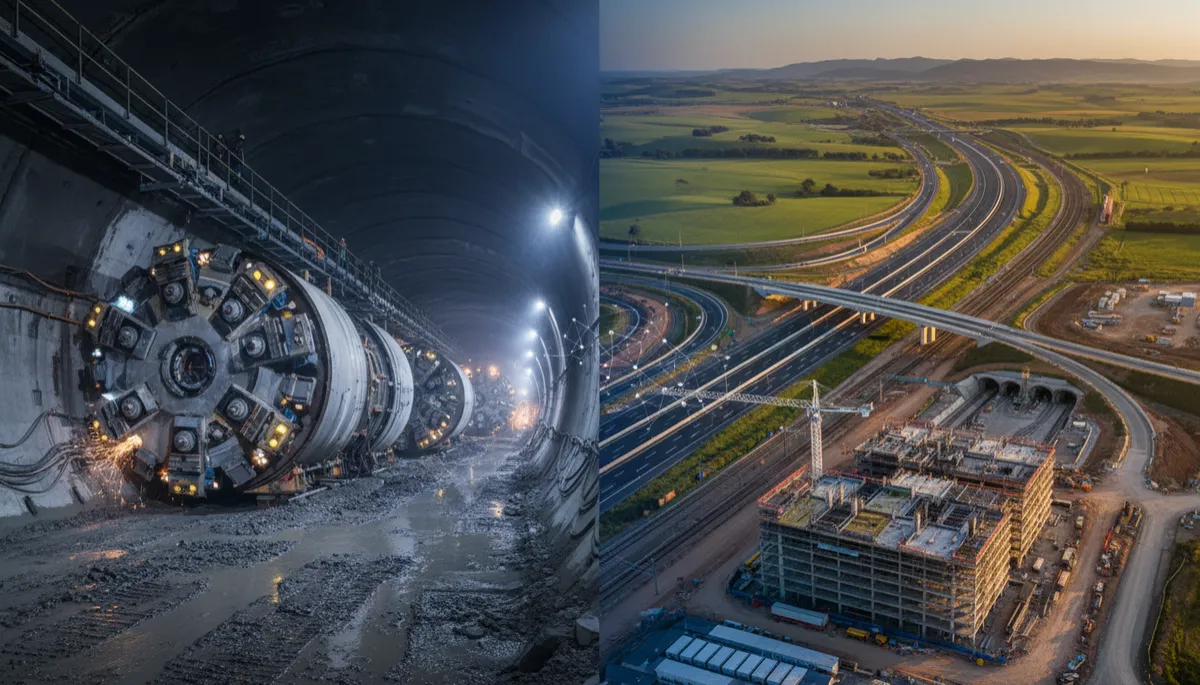
From record-breaking tunnel boring machines under Sydney Harbour to new freight corridors in New Zealand’s Bay of Plenty, the construction industry 2026 landscape across Australasia is defined by scale, complexity and long-term economic impact. Here are 10 headline projects and trends that every engineer, contractor and project leader should be watching now.
1. Western Harbour Tunnel, Sydney: TBMs Rewrite Southern Hemisphere Records
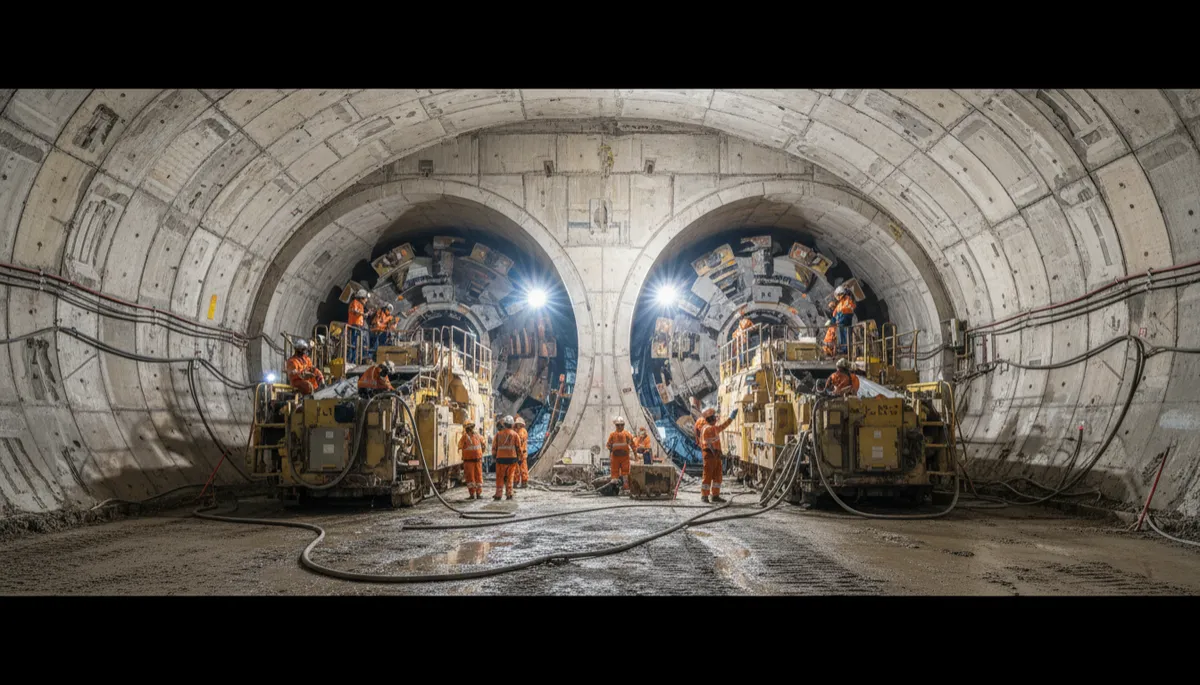
The standout Sydney Harbour Tunnel story in October 2026 is the Western Harbour Tunnel, where two record-breaking slurry tunnel boring machines (TBMs) are driving the final 1.5 km beneath the harbour. Patyegarang and Barangaroo, each 15.7 metres in diameter and weighing 4,350 tonnes, are the largest tunnel boring machines ever used in the Southern Hemisphere, assembled underground and launched from 44.7 metres beneath Birchgrove Oval.
Their task is formidable: install around 13,000 precast concrete segments and 1,300 culverts weighing 20 tonnes each, supported by an underground slurry plant capable of pumping up to 3 million litres per hour. For Australian construction professionals, the project is a live test bed in managing high-pressure ground conditions, marine geology and large-scale logistics in a constrained urban environment. The 6.5 km twin-tunnel motorway, running from Cammeray to Rozelle Interchange, remains on schedule to open to traffic in 2028, promising significant congestion relief across the harbour crossings.
2. Sydney Metro West: From Excavation to Systems Integration
While the Western Harbour Tunnel pushes ahead beneath the harbour, Sydney Metro West has already completed its tunnelling marathon. In March 2026, the sixth and final TBM broke through at Hunter Street, concluding a 34‑month programme that saw six machines excavate 24 km of twin tunnels and engage more than 22,900 workers. As of October, the project has firmly transitioned from excavation to fit-out and station construction.
John Holland is delivering 60 km of track and rail systems, including a 38‑hectare stabling and maintenance facility at Clyde, while Gamuda leads the design and build of key western stations such as Westmead and Burwood North. The Metro Trains West consortium will supply and operate AI-enabled rolling stock under a 15‑year operations and maintenance contract. For project managers, the focus now is on systems integration, interface management and staging works in dense brownfield precincts, with the line targeting a 2032 opening to transform east–west connectivity across Greater Sydney’s infrastructure pipeline.
3. Melbourne Suburban Rail Loop (SRL East): Ring-Rail Vision Becomes Reality
In Melbourne, SRL East has moved decisively into active tunnelling through 2026. The first stage of the Suburban Rail Loop comprises 26 km of twin tunnels connecting six new underground stations at Cheltenham, Clayton, Monash, Glen Waverley, Burwood and Box Hill. For design and construction teams, SRL East is redefining how orbital rail can unlock land-use change around university, health and innovation precincts, while demanding meticulous coordination of utilities, ground conditions and community impacts across multiple local government areas.
With tunnelling ramps and launch sites now fully mobilised, the project is entering a long-duration phase where spoil management, segment production and station box excavation must remain tightly sequenced. SRL East is central to Victoria’s long-term public transport strategy, setting a new benchmark for complex underground delivery in a live suburban environment.
4. Inland Rail: Illabo to Stockinbingal Unlocks a New Freight Spine
Inland Rail’s Illabo to Stockinbingal section in New South Wales is another critical piece of the Australian construction story in 2026. Construction on the 39 km new standard‑gauge alignment began mid‑year, and by October the first section of new track had been laid at Stockinbingal, with almost 75% of the required rail delivered to worksites. The bypass of Cootamundra and the Bethungra Spiral will improve gradients and operational efficiency for long freight trains on the Melbourne–Brisbane corridor.
The package includes two rail bridges, eight waterway bridges, one road‑over‑rail bridge and 10 stock underpasses, requiring close collaboration between civil, structural and rail systems teams. For regional contractors and suppliers, Illabo to Stockinbingal is a significant opportunity to build capability in heavy-haul rail delivery while contributing to a national freight backbone that will operate for generations.
5. Tauranga–Hamilton Highway: Strengthening NZ’s Freight Heartland
Across the Tasman, NZ infrastructure programmes are equally active. The Tauranga–Hamilton highway in the Bay of Plenty has spent much of 2026 in major earthworks, transitioning into pavement and finishing works as the year progresses. Stage 1, due for completion in 2028, sits within New Zealand’s principal freight region, linking the Port of Tauranga—New Zealand’s largest seaport by freight volume—with Auckland and Hamilton.
Geotechnical risk management, stormwater design and resilience to extreme weather events are front-of-mind for delivery teams, reflecting the country’s recent climate impacts. For contractors, the project exemplifies how highway design is evolving: wider cross‑sections for freight, safer intersections, and embedded provision for future technology such as connected and autonomous vehicles along key freight corridors.
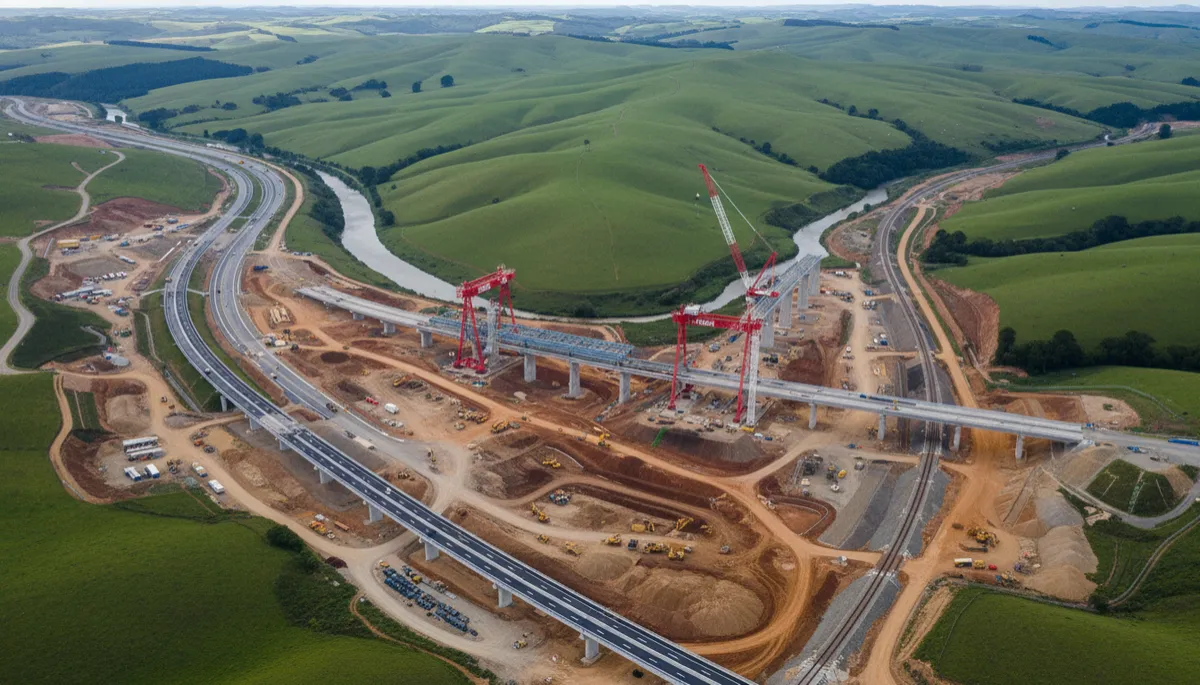
Integrated road and rail corridors are redefining freight efficiency across Australasia.
6. Fast-Tracked Corridors and Ports: NZ’s Pipeline Accelerates
The Tauranga–Hamilton link is part of a broader NZ infrastructure surge. Waka Kotahi’s Mill Road Stage 1 in South Auckland has entered the fast‑track approvals process, while a PPP agreement for the 26 km Warkworth–Te Hana expressway was signed in July 2026, moving the Northland Expressway closer to delivery. At the same time, fast‑tracked approvals for North‑West Rapid Transit in Auckland and the Stella Passage development at the Port of Tauranga underline the strategic focus on freight and urban mobility.
New Zealand’s National Infrastructure Pipeline has risen to NZ$290 billion, with an expected NZ$18.6 billion in funded or confirmed spend over the next 12 months—around 4.2% of GDP. For contractors and consultants, this depth of committed work is reshaping resource planning, training pipelines and joint‑venture strategies.
7. Data Centres and Energy: New Asset Classes in Demand
Beyond transport, a wave of data centre construction is sweeping both countries, driven by AI adoption, cloud demand and data sovereignty requirements. For builders, these assets combine high‑spec MEP systems, resilience requirements and tight delivery windows, often in brownfield industrial locations. In New Zealand, new solar and wind projects—including recent acquisitions of 205 MW of solar capacity—are also diversifying the workload for civil and electrical contractors.
8. Brisbane 2032 and Health: Queensland’s Construction Surge
In Queensland, preparations for the Brisbane 2032 Olympics are catalysing an extensive programme of transport, venue and accommodation works, alongside an AU$18.5 billion hospital infrastructure pipeline. Turner & Townsend forecasts construction cost escalation of around 7.2% in 2026, challenging estimators and commercial managers to manage risk allowances, procurement timing and contract strategies in a heated market.
9. Market Outlook: Growth, Capacity and Competition
According to Research and Markets (5 October 2026), Australia’s construction industry is forecast to grow 4.8% in real terms in 2026, supported by transport, social infrastructure and private-sector investment in logistics and data centres. New Zealand is expected to grow 3.4% in 2026, with average annual expansion of 4.7% through 2030. Building consents in NZ rose 10.3% year‑on‑year in February 2026, signalling strong underlying demand.
For industry executives, this means sustained competition for skilled labour, plant and materials. It also reinforces the need for collaborative contracting models, digital delivery, and off‑site manufacturing to maintain productivity as workloads peak across the infrastructure pipeline.
10. What It Means for Project Teams in 2026 and Beyond
Collectively, these mega-projects illustrate a step change in the ambition and technical sophistication of NZ infrastructure and Australian construction. Whether you are coordinating TBM operations under Sydney Harbour, managing earthworks on the Tauranga–Hamilton corridor, or bidding for data centre packages in Auckland or Melbourne, the common threads are clear: deeper collaboration, sharper risk allocation, and a premium on experienced delivery teams.
As 2026 progresses, the challenge for contractors, engineers and project managers will be not only delivering today’s landmark schemes, but also building the capability, supply chains and digital tools needed for the next wave. The mega‑projects now in motion are reshaping not just skylines and transport maps, but the future operating model of the construction industry itself across Australia, New Zealand and the wider Pacific.


