Top 10 Mega Projects Transforming Australia & NZ
Infrastructure, Civil Engineering, Australia, New Zealand, Mega Projects
10 Mega Infrastructure Projects Reshaping Australia & New Zealand in 2026
From record-breaking tunnel boring machines under Sydney Harbour to new rail corridors slicing through inland New South Wales, 2026 is proving to be a pivot year for Australasian infrastructure. With Australia’s construction output forecast to grow 4.8% and New Zealand’s sector expanding 3.4% in real terms this year, engineers and contractors across the Tasman are delivering some of the most complex projects either country has attempted.
1–2. Western Harbour Tunnel & Sydney Metro West: Sydney Goes Deeper and Faster
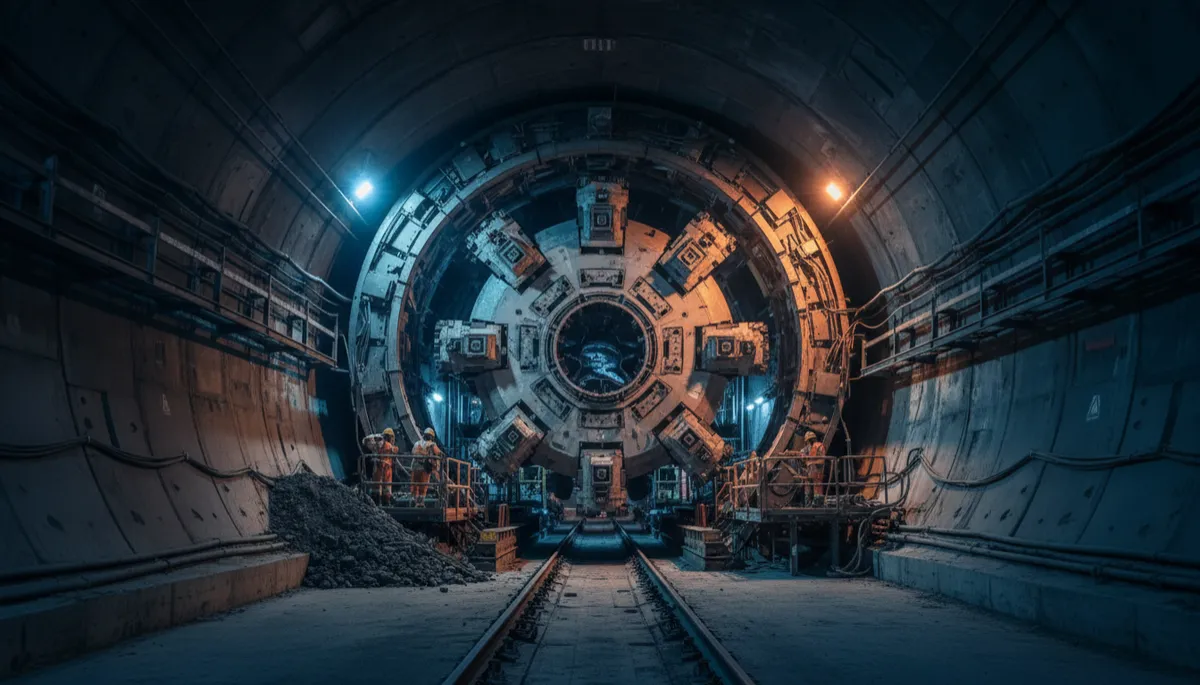
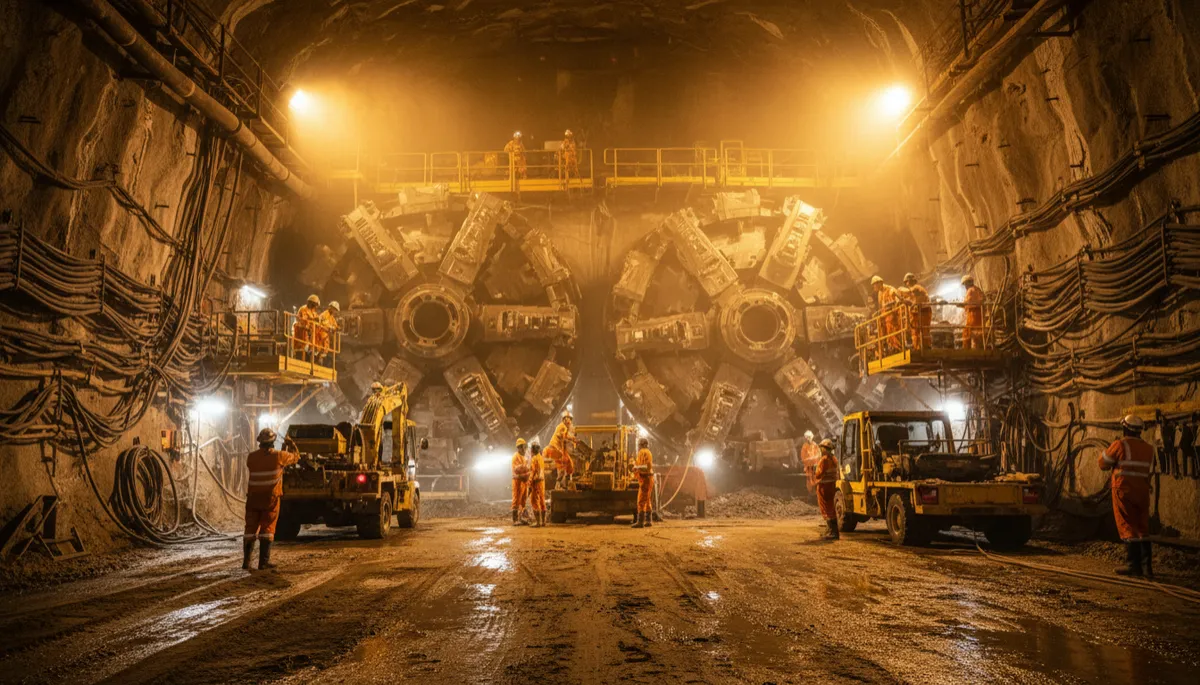
The headline story of October 2026 sits 45 metres beneath a Sydney sports ground. Two 4,350‑tonne tunnel boring machines, Patyegarang and Barangaroo, are driving the final 1.5 km of the twin Western Harbour Tunnel under Sydney Harbour and some of the densest urban fabric in Australia. With 15.7 m diameters, they are the largest TBMs ever used in the Southern Hemisphere, demanding meticulous geotechnical modelling, settlement control and live services protection as they advance toward the harbour crossing.
Running in parallel, Sydney Metro West has already completed its heavy lifting underground. In March 2026, the sixth and final TBM broke through into Hunter Street, concluding a 34‑month campaign that delivered 24 km of twin tunnels with the support of more than 22,900 workers. The project has now pivoted to station caverns, track installation, and systems fit‑out. Around 60 km of track, power, ventilation, communications and fire systems are being installed, anchored by a 38‑hectare stabling and maintenance facility at Clyde. For rail and tunnel specialists, this is a live testbed for high‑capacity metro delivery at scale ahead of the line’s targeted 2032 opening.
3–4. Melbourne’s Suburban Rail Tunnels & Inland Rail’s New Illabo–Stockinbingal Link
South of the Murray, Melbourne is boring 26 km of twin suburban railway tunnels as part of its next-generation rail program. Together with the federally backed Suburban Rail Loop East, supported by AU$3.8 billion of Commonwealth funding, these works are reshaping how Greater Melbourne will move over coming decades. For contractors, the focus is on integrating complex station boxes into constrained brownfield environments while managing groundwater, settlement and interface risks with legacy assets.
Inland Rail, meanwhile, is making tangible progress on its revised alignment. The Illabo–Stockinbingal section in New South Wales broke ground in mid‑2026. It delivers 39 km of new standard‑gauge track and 3 km of upgrades, bypassing Cootamundra and the steep, winding Bethungra Range, including the heritage Bethungra Spiral. By early October, the first new track was laid at Stockinbingal, with almost 75% of required rail delivered to site. The package includes two rail bridges over roads, eight waterway bridges, a road‑over‑rail bridge on Burley Griffin Way, ten stock underpasses, crossing loops and upgraded level crossings – a classic heavy civil programme blending greenfield and brownfield engineering under tight possession windows.
5. New Highways and Earthworks: Re‑profiling Corridors Across Australasia
New Zealand is moving millions of cubic metres of earth to deliver new highways under its NZD 11 billion National Land Transport Programme (2024–2034). Fast‑tracked projects such as the Belfast–Pegasus State Highway 1 bypass are designed to relieve congestion, improve resilience and support regional growth. For local contractors, the challenge is sequencing large earthworks, pavement construction and structures while contending with variable ground conditions and increasingly stringent environmental expectations.
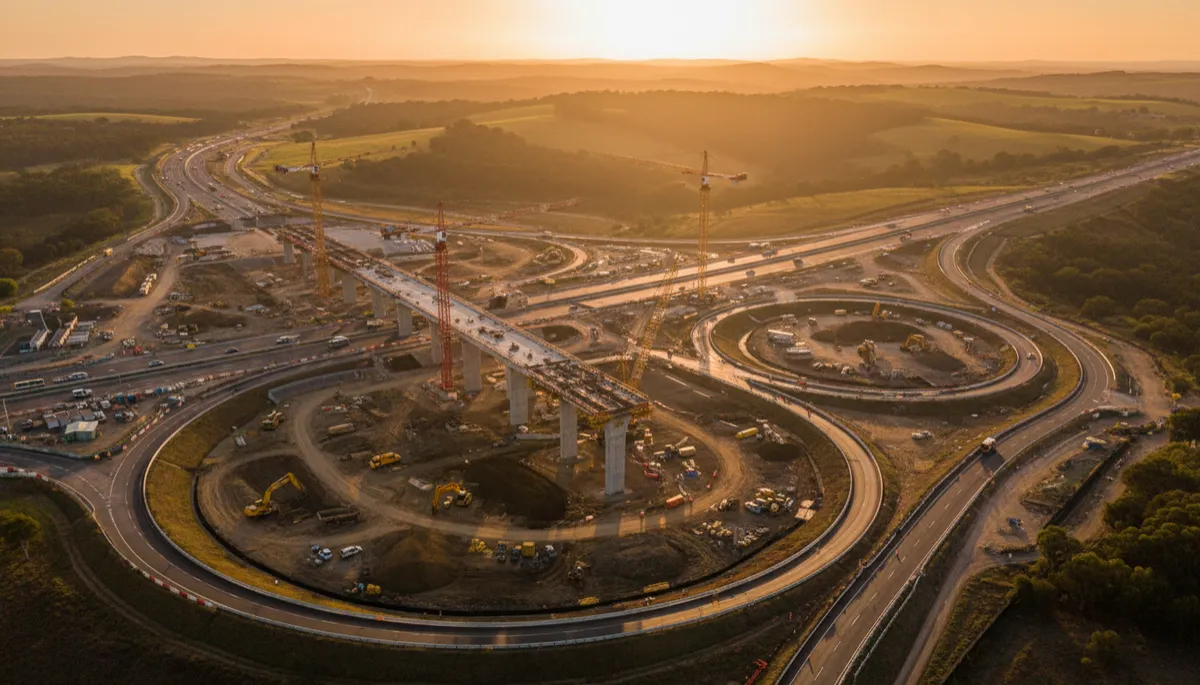
Highway corridors are being rebuilt at scale to unlock freight efficiency and resilience.
In Australia, the recently opened AU$2.24 billion M1 Pacific Motorway extension between Black Hill and Raymond Terrace closes a long‑standing gap in the Sydney–Brisbane freight corridor. At the same time, new Commonwealth funding is flowing into the Bruce Highway in Queensland and safety upgrades on the M1 in New South Wales, ensuring a multi‑year pipeline of pavement, bridge and interchange works for road specialists.
6. Data Centres: The New Social Infrastructure
A quieter but no less significant boom is occurring behind secure fences and acoustic walls. Across both countries, data centre construction has become one of the fastest‑growing non‑residential segments through to 2030, driven by AI adoption, cloud migration and tightening data sovereignty rules. In Sydney and Melbourne, multi‑storey hyperscale facilities are now competing with traditional CBD commercial projects for steel, concrete, switchgear and skilled labour.
These facilities are effectively critical infrastructure: highly resilient, power‑hungry and integration‑heavy. For engineers, that means complex M&E design, high‑capacity substations, intricate fire and redundancy systems, and increasingly ambitious sustainability targets, including on‑site battery storage and waste‑heat recovery. Contractors who can manage Tier III/IV specifications while maintaining programme certainty are in strong demand.
7. Renewable Energy & Storage: Contact Energy and Beyond
On the energy front, the transition pipeline continues to thicken. In New Zealand, Contact Energy’s NZD 525 million equity raise is backing a 150 MW solar PV plant and a 200 MW/400 MWh battery energy storage system, alongside other renewable investments. These projects exemplify the integration challenge now facing designers: aligning grid‑scale renewables and storage with existing transmission constraints, sensitive landscapes and evolving regulatory frameworks.
Similar stories are playing out across both countries, with solar farms, wind projects and large batteries advancing under fast‑track regimes. For civil and structural engineers, this means more foundations, access roads and balance‑of‑plant packages in remote locations, often under compressed procurement and delivery timelines.
8. Auckland Airport: A NZD 6.6 Billion Gateway Rebuild
Back in Auckland, the NZD 6.6 billion terminal integration project is one of New Zealand’s most complex live‑environment builds. Due for completion by 2029, it will merge domestic and international operations into a single integrated terminal, supported by new piers, aprons, landside access and utility upgrades. The works must be staged around uninterrupted airport operations, tight security protocols and increasing climate resilience requirements, demanding sophisticated phasing, logistics and stakeholder coordination from delivery teams.
9. Brisbane 2032: Olympic‑Driven Health and Transport Investment
In Queensland, the Brisbane 2032 Olympic and Paralympic Games are now a material force in the market. Cost escalation in Brisbane is forecast at around 7.2% in 2026, driven by Games‑related venues, transport upgrades and the AU$18.5 billion Queensland Hospital Rescue Plan. Several previously deferred hospital projects have restarted this year, adding to an already busy health and civic pipeline.
For contractors, the Olympics programme is about more than stadiums. It is accelerating rail, road and active transport improvements, while tightening competition for skilled labour and key materials. Programme‑level planning, alliance delivery models and early contractor involvement are becoming essential tools to manage risk across overlapping packages.
10. A Decade‑Long Pipeline: What It Means for Engineers and Contractors
Beyond individual projects, both countries now have clearer long‑term pipelines. Infrastructure Australia’s 2026 Infrastructure Priority List outlines 68 nationally significant proposals across transport, energy and water, supported by a rolling federal infrastructure programme exceeding AU$120 billion over ten years. New Zealand’s first National Infrastructure Plan sets a 30‑year vision, backed by a NZD 7 billion capital boost and a NZD 15 billion increase in the national pipeline.
For civil engineers, project managers and contractors, the message is clear: capacity, capability and collaboration will define who captures value from this cycle. Cost pressures, skills shortages and productivity constraints are real, but so are the opportunities – from mastering mega‑TBM operations under harbours, to delivering data‑rich, low‑carbon assets that will serve communities for generations. Firms that invest now in digital delivery, advanced planning, risk‑sharing procurement and cross‑Tasman partnerships will be best placed to lead the next wave of Australasian infrastructure.
SEO Title: 10 Mega Infrastructure Projects Reshaping Australia & New Zealand in 2026 | Fil Engineers Industry News
SEO Description: Explore 10 mega infrastructure projects transforming Australia and New Zealand in 2026 – from Sydney’s Western Harbour Tunnel and Inland Rail to data centres, renewables, Auckland Airport and Brisbane 2032 investments. Essential insight for civil engineers, contractors and project managers across Australasia.


