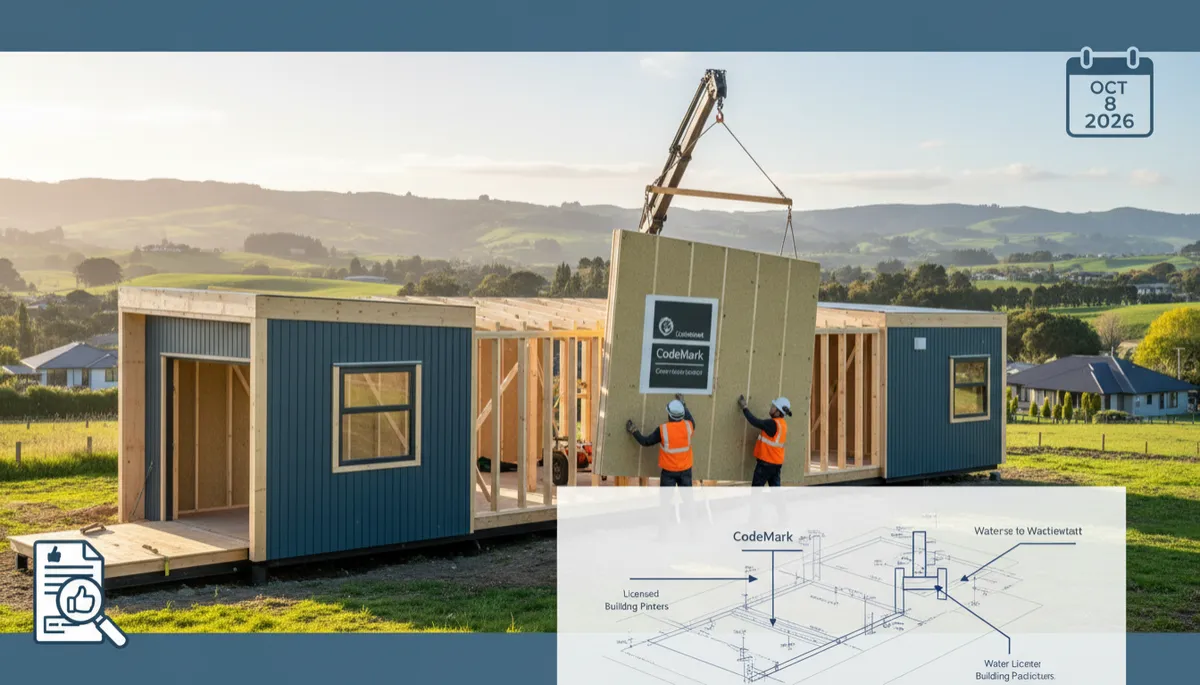
MBIE's 2026 Granny Flat Exemption Update
MBIE, Building Consent Exemptions, Granny Flats, NZ Construction
MBIE’s Updated Granny Flat Building Consent Exemption: What the October 2026 Changes Mean for NZ Construction
From 8 October 2026, New Zealand’s granny flat building consent exemption enters a new phase, widening material options and simplifying service connections. For engineers, builders and developers on both sides of the Tasman, these changes signal a more mature, systems-based approach to small dwellings in a subdued but slowly rebalancing housing market.
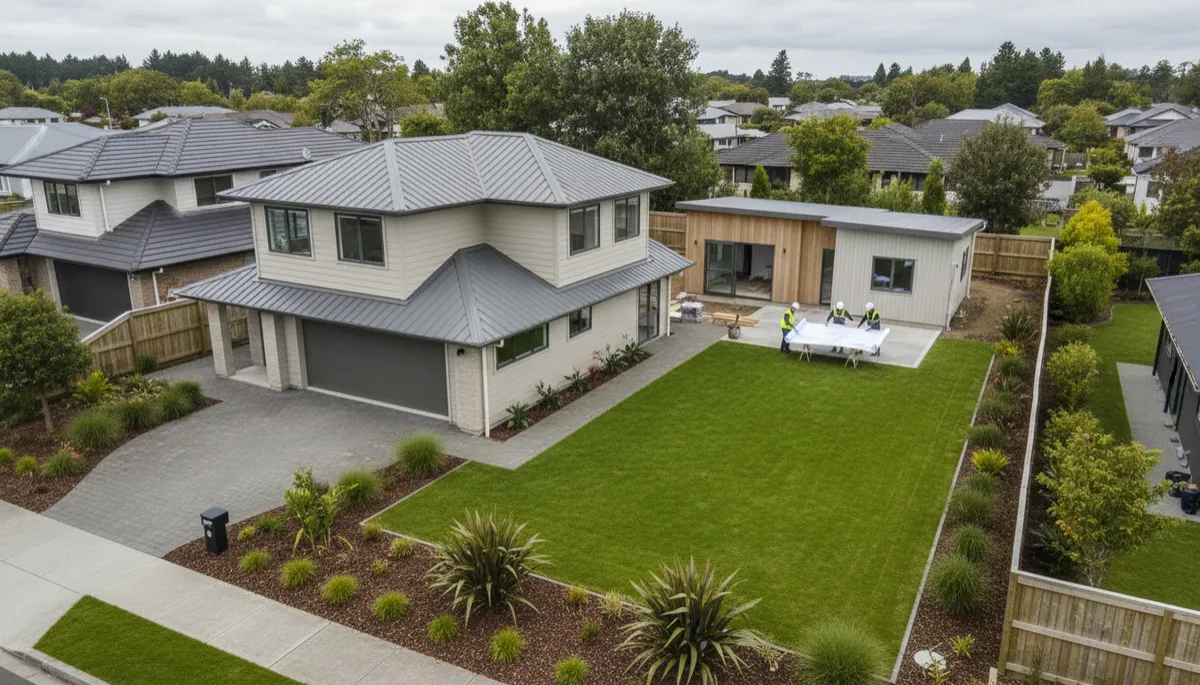
Broader material options: SIP panels and solid timber systems in scope
The headline change from 8 October 2026 is that the granny flat building consent exemption will explicitly allow a wider range of building products. In particular, Structural Insulated Panel (SIP) systems with CodeMark certification and solid timber building systems can be used within the exemption, provided they are installed in line with their certificates and design guides and the work still complies with the New Zealand Building Code. MBIE’s recognition of CodeMark-certified SIP panels is significant: it gives designers and builders confidence that common SIP systems already used in NZ construction can be deployed in exempt granny flat projects without reverting to a full building consent pathway for the structure itself.
For engineers, this widens the toolkit for thermally efficient, lightweight envelopes, particularly in regions with challenging ground conditions or tighter sites. Solid timber systems, including engineered timber panels, align with industry interest in low‑carbon materials and prefabricated homes, while still requiring robust structural design and detailing to NZS standards. The key shift is not a relaxation of performance expectations, but a more product‑agnostic framework that acknowledges contemporary building systems when used by competent practitioners.
Easier connections to water, wastewater and stormwater services
The October 2026 update also clarifies and simplifies how exempt granny flats can be serviced. The revised settings make it easier to connect to existing water supply, wastewater and stormwater networks on a property, and to use on‑site systems where council reticulated services are not available. While plumbing and drainage work must still be undertaken by authorised practitioners and meet all relevant Building Code clauses, the intent is to remove unnecessary ambiguity that has slowed some projects since January 2026.
For councils, clearer parameters around service connections should reduce edge‑case disputes and repeated queries. For builders and homeowners, it offers more predictable design pathways, particularly on infill sites where capacity in existing laterals, pump stations or soakage is a key constraint. Engineers will still need to assess loading on existing systems, but will be able to do so within a more explicit exemption framework rather than trying to retrofit standard consenting practice to exempt work.
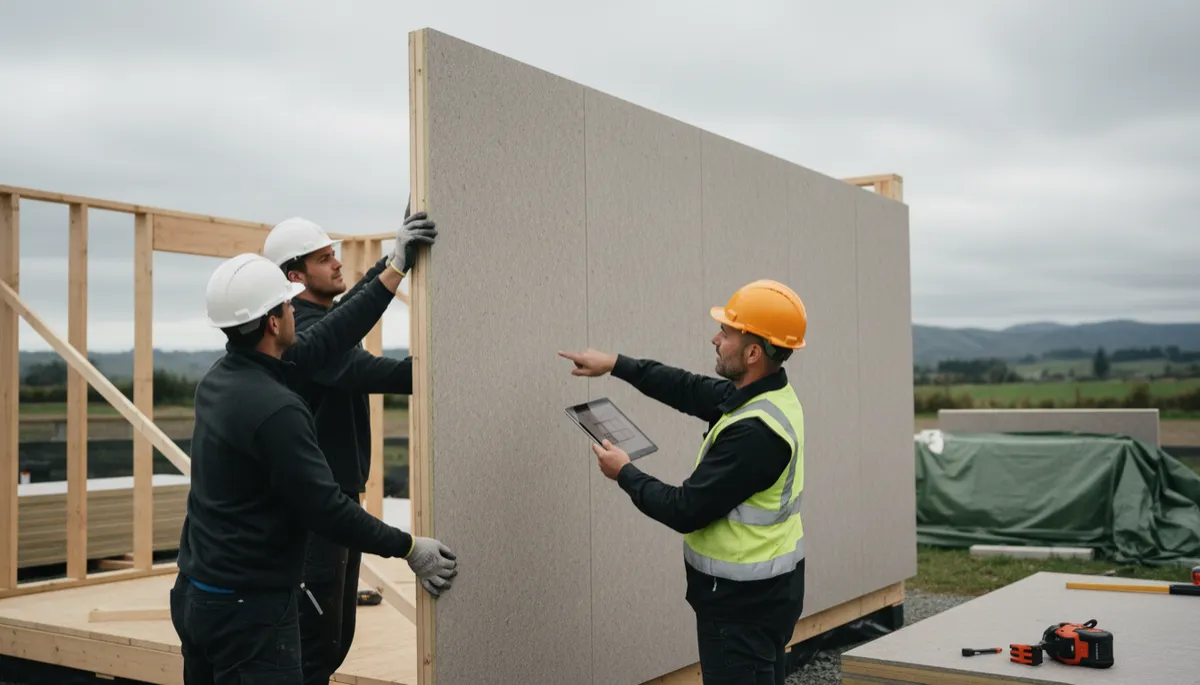
CodeMark‑certified SIP panels can now be used in exempt granny flats from October 2026.
Supporting prefabricated, off‑site manufactured and modern methods of construction
The expanded building consent exemption is deliberately aligned with modern methods of construction. By enabling SIP panels and solid timber systems, MBIE is signalling that prefabricated homes and off‑site manufactured modules have a clear role in addressing New Zealand’s housing supply pressures. Factory‑built shells that can be craned into place as compliant granny flats up to 70 m² are now more attractive, as the regulatory friction on both structure and servicing is reduced, provided Licensed Building Practitioners are involved and documentation is robust.
For manufacturers, the October 2026 settings create a defined market segment where standardised designs, repeatable detailing and integrated service solutions can be offered at scale. For engineers and architects, there is an opportunity to refine template designs optimised for NZ wind, seismic and climate zones, then deploy them rapidly as demand for granny flat solutions grows alongside population and household formation.
Updated MBIE guidance and resources from 8 October 2026
MBIE has confirmed that updated guidance, quick guides and supporting resources will be published on the Building Performance website from 8 October. These will cover acceptable building products under the exemption, service connection scenarios, and foundation options suitable for small, standalone dwellings. For practitioners, the practical value lies in having authoritative, easily shareable material to brief clients, manage risk and align expectations with councils.
The popularity of existing resources underscores this demand. Since the exemption took effect in January 2026, MBIE has recorded more than 52,000 downloads of its policy guidance document, a strong indication that the industry and homeowners are actively engaging with the new settings and looking for clear direction on compliance pathways.
Recap: the original 70 m² granny flat exemption in force since January 2026
The October changes build on the Building and Construction (Small Stand‑alone Dwellings) Amendment Act, which has been in force since 15 January 2026. Under that framework, a granny flat up to 70 m² can be built without a building consent if it is simple, single‑storey, standalone, complies with the NZ Building Code, and the work is carried out or supervised by Licensed Building Practitioners and other authorised trades. Homeowners must still notify their council before starting and on completion, but councils do not inspect the exempt work.
MBIE’s analysis suggests the exemption can save homeowners several thousand dollars in consent fees and shave months off programme timelines. In a market where construction activity remains subdued and finance conditions are tighter, these savings are material for small‑scale projects such as backyard units, multi‑generational living arrangements and rental‑ready secondary dwellings.
Implications for engineers, builders and homeowners in a tight housing market
As of September 2026, New Zealand’s housing supply picture is mixed. Annual dwelling consents have climbed back above 40,000, but construction activity is still subdued compared with the 2021–2022 peak. The Official Cash Rate sits at 2.75%, supporting a gradual recovery but leaving developers and households cautious. At the same time, population growth and household formation continue to drive underlying housing demand, particularly in Auckland and Canterbury.
Within this context, the expanded granny flat building consent exemption is best seen as a targeted, practical lever rather than a silver bullet. For engineers, it creates a repeatable project type where efficient structural solutions, SIP panels, and solid timber systems can be applied at scale with known regulatory parameters. For builders, it offers a pipeline of relatively small but steady projects that can smooth workloads through the cycle, especially when larger commercial work is delayed. For homeowners, it opens a clearer path to adding flexible living space or rental units without navigating a full consent process, while still relying on Licensed Building Practitioners to safeguard quality and compliance.
For the wider NZ construction sector, the October 2026 update reinforces a direction of travel: more performance‑based regulation, greater acceptance of prefabricated homes and off‑site manufacture, and a stronger emphasis on competent people and certified products rather than prescriptive methods. Firms that invest now in standardised granny flat offerings, supply chains for SIP panels and solid timber systems, and clear client education around the exemption will be well placed as demand for small, efficient dwellings continues to grow.


