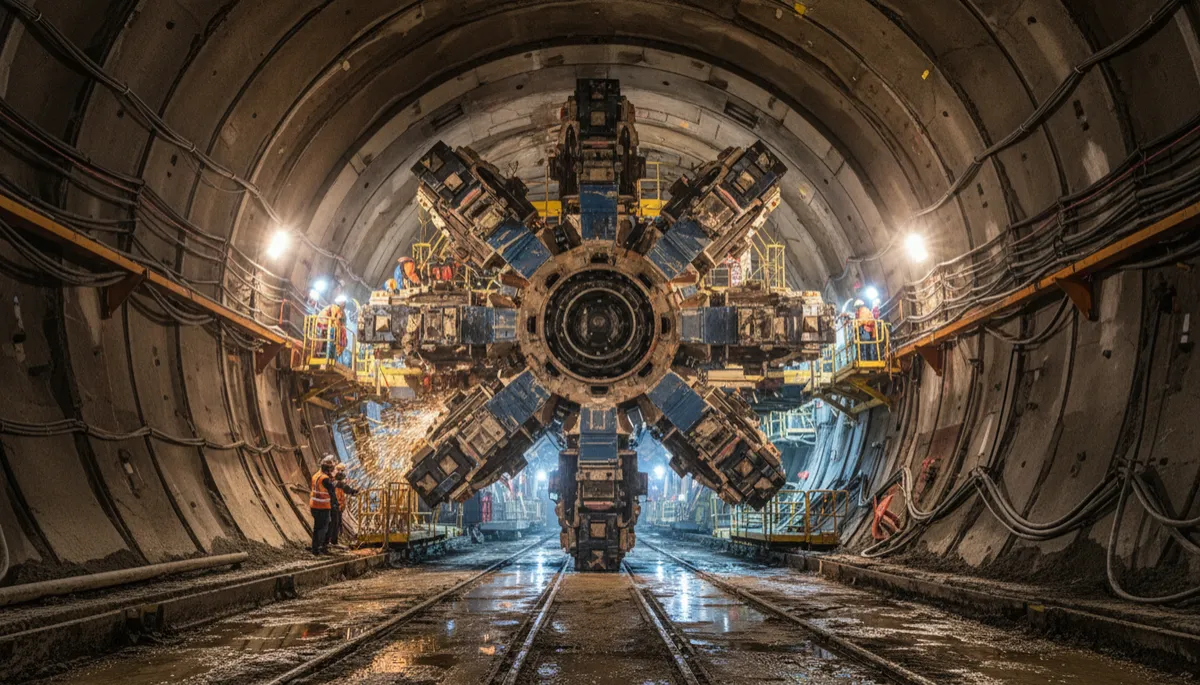
Top 10 Infrastructure Projects in Australia & NZ
Infrastructure, Construction Industry News, Australia & New Zealand
10 Major Infrastructure Projects Shaping Australia & New Zealand Right Now
From mega tunnels under Sydney Harbour to new expressways in the Waikato, 2026 is a defining year for Australia infrastructure projects and NZ construction 2026. The following ten projects highlight the scale, technical complexity and pipeline depth now driving opportunities for engineers, contractors and construction professionals across both countries.
1. Western Harbour Tunnel, Sydney
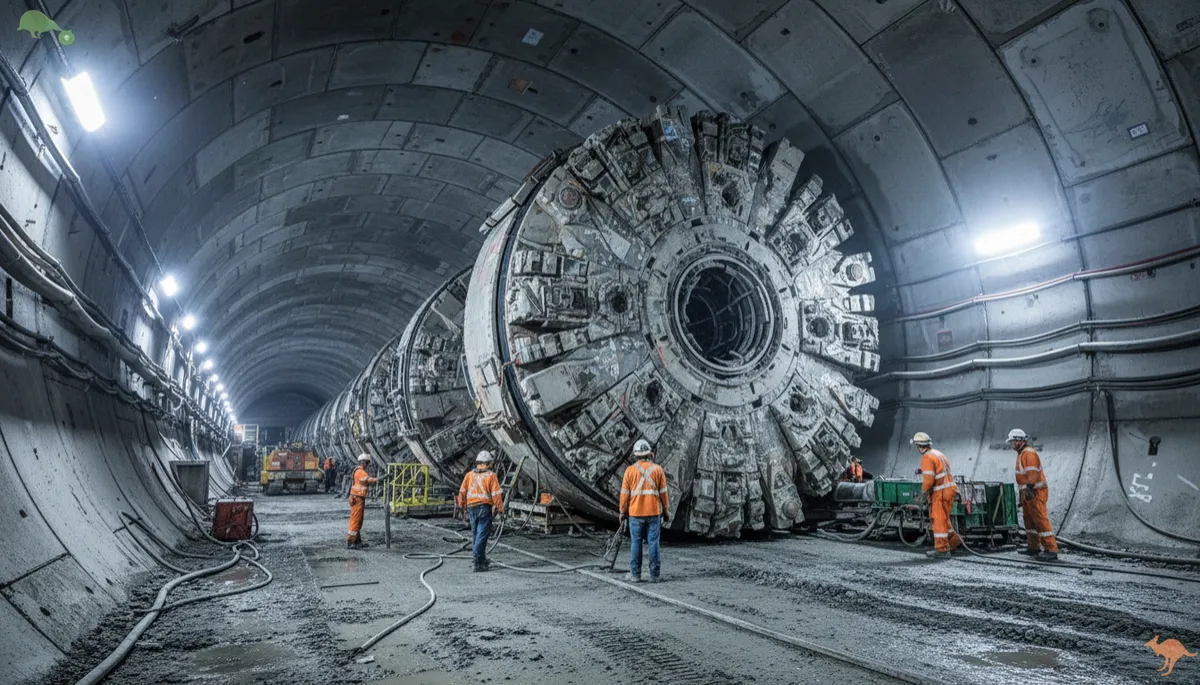
The Western Harbour Tunnel has become a flagship for complex urban tunnelling. Two tunnel boring machines, Patyegarang and Barangaroo, each weighing around 4,350 tonnes with 15.7 metre cutterheads, are now driving their final 1.5 kilometres beneath Sydney Harbour at a depth of roughly 45 metres. These are the largest TBMs ever used in the Southern Hemisphere, demanding meticulous geotechnical modelling, settlement control and segmental lining design. For civil and structural engineers, the project is a live case study in managing harbour geology, high water pressures and interface risks in a constrained metropolitan environment.
2. Sydney Metro West – From Tunnelling to Systems Delivery
Sydney Metro West completed its main tunnelling programme in March 2026, after six TBMs delivered 24 kilometres of twin tunnels in just 34 months and mobilised more than 22,900 workers. The project has now pivoted into station construction, trackwork and rail systems installation for the new 9‑station line between Westmead and the CBD. Around 60 kilometres of track will ultimately be laid. For the industry, the focus is shifting from excavation to systems integration, constructability of complex underground stations, and optimising programme interfaces across civils, M&E, signalling and fit‑out.
3. Melbourne Suburban Rail Loop East – A New Orbital Spine
The Melbourne Suburban Rail Loop (SRL) has moved from concept to reality, with SRL East now in active tunnelling. This first stage delivers 26 kilometres of twin tunnels and six new underground stations at Cheltenham, Clayton, Monash, Glen Waverley, Burwood and Box Hill, reaching depths of around 60 metres. TBMs exceeding 100 metres in length and more than seven metres in diameter are operating on renewable electricity, aligning mega‑project delivery with decarbonisation objectives. The scale of underground station caverns, cross passages and utility diversions is creating sustained demand for structural design, temporary works, and digital engineering capabilities across Victoria.
4. Inland Rail – Accelerating Freight Capacity in Regional Australia
Australia’s Inland Rail continues to reshape the national freight spine. In 2026, construction has concentrated on sections south of Parkes, with major works between Albury and Illabo and the new Illabo to Stockinbingal section now underway. This package alone comprises 39 kilometres of new standard‑gauge railway and 3 kilometres of upgraded track. By early October, the first new rail had been laid at Stockinbingal and almost 75% of the required rail delivered to site. For contractors, the project combines greenfield formation, brownfield interfaces, complex level crossing treatments and climate‑resilient design in flood‑prone corridors, under close scrutiny from freight customers and regulators.
5. New Zealand’s Roads of National Significance and Waikato Expressway
Across the Tasman, New Zealand is moving millions of cubic metres of earth on new highways under the Roads of National Significance (RoNS) programme. Budget 2026 committed almost NZD 1.8 billion to extend the Waikato Expressway from Cambridge to Piarere, reinforcing a critical freight and economic corridor linking Auckland, Waikato and Tauranga to the central and lower North Island. The expressway investment sits within an NZD 11 billion National Land Transport Programme (2024–2034), which also backs projects such as Mill Road Stage 1 in South Auckland and the Belfast–Pegasus SH1 bypass. For NZ construction 2026, RoNS is a core driver of demand for pavement design, geotechnical engineering, structures, and traffic management expertise.
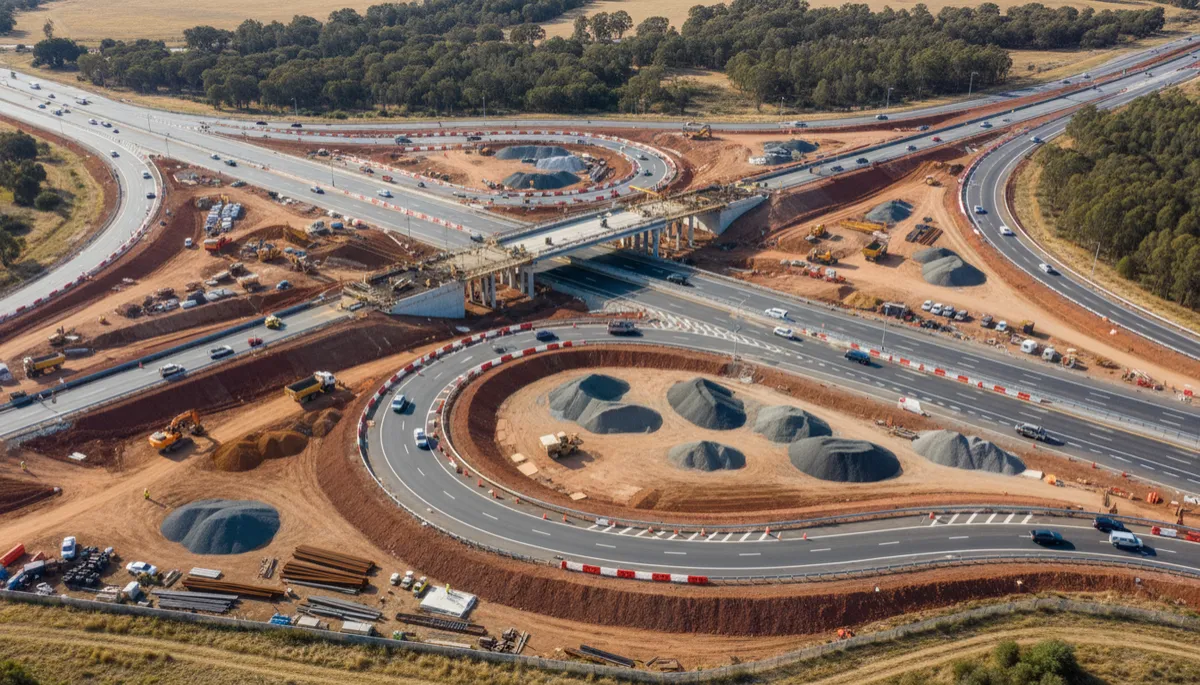
Large-scale highway and expressway upgrades are redefining freight and commuter routes across Australasia.
6. Western Sydney Airport and Surrounding Precincts
Western Sydney International (Nancy‑Bird Walton) Airport remains on track to commence operations in 2026, anchoring a broader aerotropolis precinct. Airside pavements, terminal structures, utilities and intermodal connections are nearing completion, while enabling roads and future rail links advance in parallel. The project is a focal point for integrated land‑use and transport planning, and a major employer of structural, civil and services engineers, with long‑term opportunities in surrounding logistics, warehousing and data centre developments.
7. Arafura Rare Earths Nolans Project, Northern Territory
Construction on the Arafura Rare Earths Nolans Project north of Alice Springs officially began on 8 October 2026, backed by around AUD 1.2 billion in federal support. The project underpins clean energy and defence supply chains, combining process plant civils, tailings and water infrastructure, heavy haul access, and remote‑area logistics. For engineering teams, Nolans exemplifies the growing convergence of resources, energy transition and strategic infrastructure in the national pipeline.
8. Fast‑Tracked Rapid Transit and Highways in Auckland and Canterbury
New Zealand’s fast‑track approvals framework is accelerating several region‑shaping schemes. The North‑West Rapid Transit project alongside SH16 in Auckland has been fast‑tracked, while Mill Road Stage 1 and the SH1 Belfast–Pegasus motorway are progressing as part of the RoNS portfolio. These corridors demand sophisticated design for resilience, including seismic detailing of bridges, stormwater and flood management, and staging solutions that maintain network performance during construction.
9. Ports, Energy and Industrial Hubs Across New Zealand
Beyond transport corridors, New Zealand is advancing a suite of port, energy and industrial projects. The Stella Passage development at Port of Tauranga, multiple solar farms in Canterbury and Foxton, the Māhinerangi Wind Farm, and industrial developments such as Ryans Road in Christchurch are all moving through fast‑track channels. Together with an estimated NZD 7 billion capital injection in Budget 2026 and a national infrastructure pipeline valued around NZD 274 billion, these projects broaden the opportunity set for structural, marine, and electrical engineers, as well as contractors with renewable and industrial delivery capability.
10. Data Centres and Digital Infrastructure Boom
Underpinning many of these physical assets is a surge in data centre construction across both countries, driven by AI adoption and cloud demand. Recent forecasts indicate data centre commencements in Australia grew more than 50% in 2024–25 and continue to rise, with capacity expected to reach about 2,800 MW. New Zealand is also seeing increased investment in digital infrastructure, often co‑located with major transport and industrial hubs. This trend is reshaping building services, structural loading, power supply and cooling strategies, and is becoming a core growth segment alongside traditional transport engineering.
Market Outlook: Opportunity Amid Cost and Capacity Pressures
The latest market forecasts underline the significance of these schemes. Australia’s construction output reached a record AUD 324.8 billion in the 12 months to March 2026, up 4.5% year‑on‑year, with total output projected to rise by roughly USD 40.2 billion between 2025 and 2030. New Zealand’s construction sector is expected to grow 3.4% in real terms in 2026, with building consents up 10.3% year‑on‑year and more than 37,800 new homes consented in the year to March 2026.
Against this backdrop, firms are also navigating persistent cost escalation (often around 5% per annum on major infrastructure), labour shortages and productivity challenges. Queensland in particular is emerging as a construction hotspot ahead of Brisbane 2032, with costs forecast to rise 7.2% in 2026. For engineering consultancies and contractors, disciplined cost planning, robust risk allocation and early contractor involvement are becoming non‑negotiable on Australia infrastructure projects and NZ construction 2026 programmes alike.
What This Means for Engineers and Contractors
Collectively, these ten projects signal a sustained, infrastructure‑led cycle across Australasia, with a strong tilt toward heavy civil, rail, highways, ports, energy and data infrastructure. For civil and structural engineers, the priority is building capability in complex tunnelling, systems integration, digital design and whole‑of‑life asset management. For contractors, success will hinge on supply‑chain resilience, collaborative contracting, and the ability to mobilise multidisciplinary teams across borders.
As public and private investment continues to flow into transformative transport links, resilient highways and digital‑ready precincts, Australia and New Zealand engineers are well positioned to shape the next generation of infrastructure – provided they can innovate fast enough to keep pace with the scale, complexity and sustainability expectations of this new pipeline.


