
Australia Adopts NZ Building Code for MMC Growth
Construction industry, Building code reform, Modern Methods of Construction
Australia Eyes NZ's Streamlined Building Code as MMC Gains Cross-Party Momentum
A trans-Tasman shift in building regulation and Modern Methods of Construction is reshaping how engineers, builders and developers plan the next decade of housing delivery.
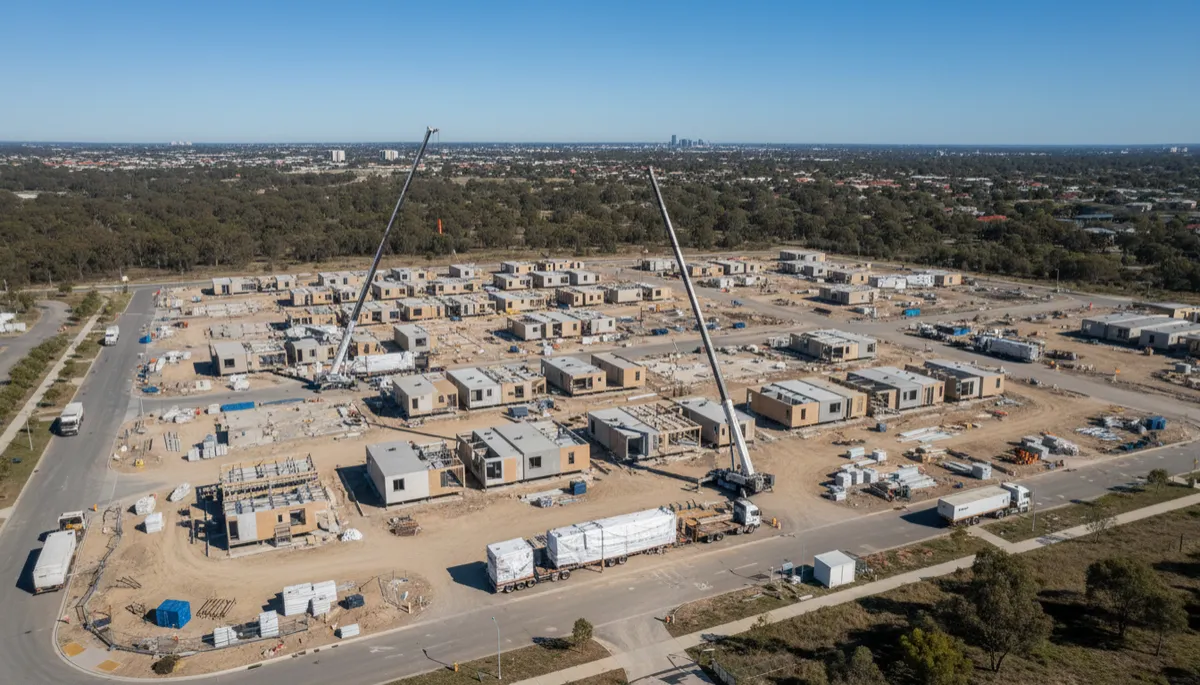
From 2,000 Pages to 80: Australia Looks Across the Ditch
Australia’s push to overhaul its National Construction Code (NCC) has taken a decisive turn, with policymakers openly citing the NZ building code as a model. New Zealand’s core Building Code runs to roughly 83 pages, setting performance requirements and leaving industry to choose the most efficient compliance pathways. By contrast, Australia’s NCC stretches over 2,000 pages across multiple volumes and referenced standards.
Opposition shadow housing minister Senator Andrew Bragg has now called for Australia to slash the NCC down to around 80 pages, explicitly mirroring New Zealand’s approach. His proposal aligns with a broader government-led project to “modernise and streamline” the NCC, including better usability, stronger support for innovation and lower compliance costs, as outlined in Treasury’s 2026 interim report on code reform.
MMC Australia: Engineers Back Off-Site Manufacturing
At the same time, Modern Methods of Construction (MMC) are moving from the margins to the mainstream of construction industry policy. Engineers Australia has urged the federal government to actively promote MMC to support off-site manufacturing. Their position is clear: factory-based production of building components and prefabricated housing can deliver faster, cleaner and more resilient construction outcomes than conventional site-based methods, particularly at scale.
For practitioners, this means greater emphasis on Design for Manufacture and Assembly (DfMA), repeatable details, and tighter integration between design offices, factories and site operations. The message from the engineering community is that industrialised construction is no longer a niche; it is a prerequisite for meeting Australia’s housing and infrastructure targets within existing labour and materials constraints.
ABCB to Develop National Certification for Prefabricated Construction
In a significant step, the federal government has tasked the Australian Building Codes Board (ABCB) with developing a national voluntary certification scheme for manufacturers of prefabricated construction. This move responds to long-standing industry calls for consistent quality benchmarks and clearer pathways for code compliance of off-site manufactured products and modular homes.
A well-designed scheme could give certifiers, financiers and insurers greater confidence in MMC Australia projects, reducing approval friction and perceived risk. For manufacturers, it offers a way to differentiate capability, demonstrate compliance with the evolving NCC 2025 framework, and compete more effectively on national procurement programs such as Victoria’s Big Housing Build and emerging federal housing initiatives.
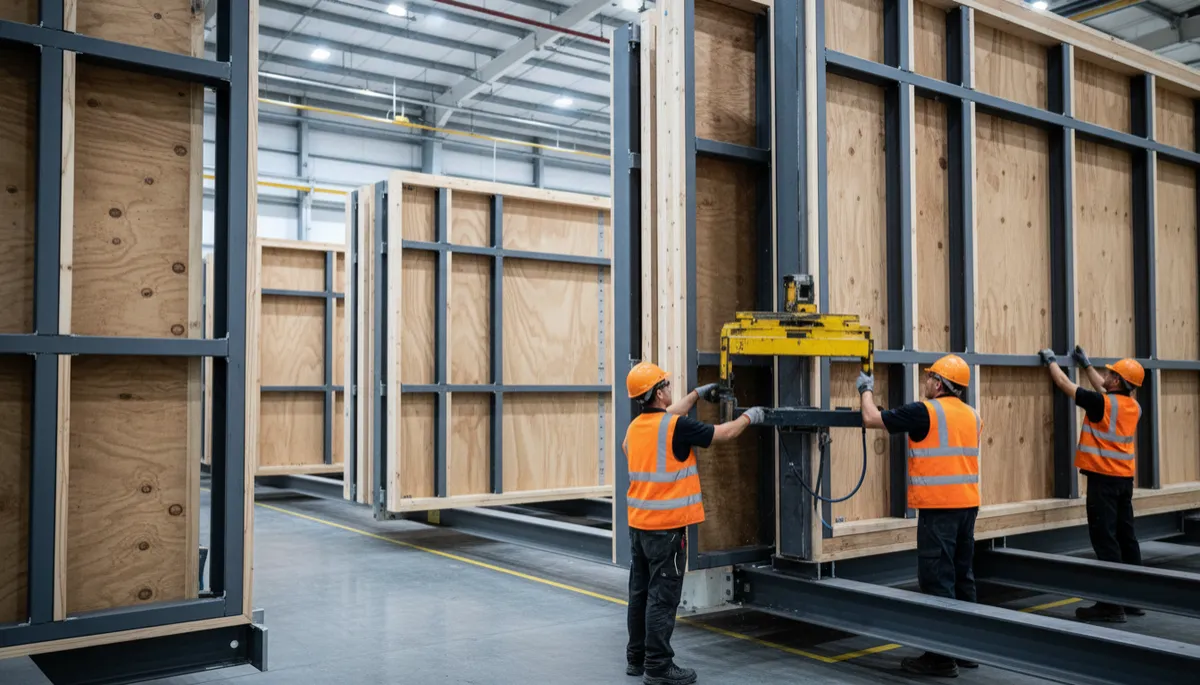
Industrialised off-site manufacturing is central to scaling modular homes across Australasia.
Treasurers and Parties Align on MMC to Tackle the Housing Crisis
In August 2026, Australia’s federal and state treasurers agreed to review regulatory, financial and planning barriers to wider adoption of MMC. This treasurers’ process sits alongside a Senate productivity inquiry that has floated a national “pattern book” of standardised housing designs suitable for volumetric modular delivery.
Importantly, the Albanese government is already investing in MMC through social and affordable housing programs, regional manufacturing grants and workforce upskilling. With the Opposition now championing both building code reform and MMC, there is rare cross-party consensus that industrialised construction must be part of the solution to Australia’s housing affordability crisis. For the sector, this signals a more stable policy environment in which to invest in factories, digital workflows and long-term capability.
Lessons from a Resetting New Zealand Market
Across the Tasman, New Zealand’s construction sector is in a period of stabilisation and reset after several years of sharp cost escalation and labour shortages. A series of interest rate cuts, combined with renewed infrastructure investment, is underpinning a gradual recovery. Within this context, MMC and prefabricated housing remain important tools, but the emphasis has shifted toward sustainable growth, risk management and better alignment between pipeline and capacity.
The concise NZ building code framework, supported by performance-based compliance documents and centralised product specifications, gives New Zealand practitioners a comparatively simple regulatory base from which to innovate. Australian policymakers now see this as a potential blueprint for a leaner NCC that still safeguards quality and resilience while enabling new delivery models such as volumetric modular and panelised systems.
Why MMC Matters for Trans-Tasman Construction Professionals
For engineers, developers and project managers in both countries, the growing focus on Modern Methods of Construction is not just a regulatory story; it is a commercial and technical imperative. Off-site manufacturing can cut program times by up to 50%, reduce rework through factory-level quality control, and smooth labour demand by shifting work into controlled environments. These efficiency gains translate directly into lower delivery risk and improved project certainty.
Cost reduction is equally critical. Standardised designs and repeatable components for modular homes can drive down unit costs over time, especially when supported by long-term procurement pipelines. Sustainability benefits are also material: reduced waste, optimised material use, and better thermal performance through precision manufacturing all support net-zero commitments. Most importantly, MMC offers a credible pathway to increase housing supply at the speed and scale required to address affordability pressures in major Australasian cities and regions.
What This Policy Shift Means for Engineers and Firms Across the Tasman
If Australia proceeds with a simplified NCC inspired by New Zealand’s model, combined with a national certification regime for prefabricated manufacturers, the operating environment for MMC will change rapidly. Design practices will need to strengthen their DfMA capability and digital engineering workflows. Builders will be pushed to form earlier, deeper partnerships with factories. Manufacturers will face higher expectations on traceability, testing and documentation, but will also gain clearer market signals and easier access to cross-jurisdictional work.
For New Zealand firms, a more MMC-friendly and harmonised Australian framework could open new export and collaboration opportunities in systems, products and expertise. For Australian practitioners, New Zealand’s experience offers practical lessons on performance-based regulation, product assurance and managing a cyclical market. As both countries converge on industrialised construction, those who invest now in capability, partnerships and compliance will be best placed to lead the next phase of trans-Tasman growth in an increasingly integrated construction industry.
Meta Title: Australia Eyes NZ Building Code as MMC Australia Gains Momentum
Meta Description: Australia considers adopting a streamlined NZ building code model as Modern Methods of Construction, prefabricated housing and modular homes gain cross-party backing. What this building code reform means for engineers and construction firms in Australia and New Zealand.


