
Australia Adopts NZ's Building Code for MMC Boost
Construction, Building Codes, MMC, Australia, New Zealand
Australia Eyes NZ's Streamlined Building Code as MMC Gains Cross-Party Momentum
A new push to simplify Australia’s building regulations and accelerate Modern Methods of Construction (MMC) is drawing direct inspiration from New Zealand’s concise 83-page building code, with significant implications for construction professionals on both sides of the Tasman.
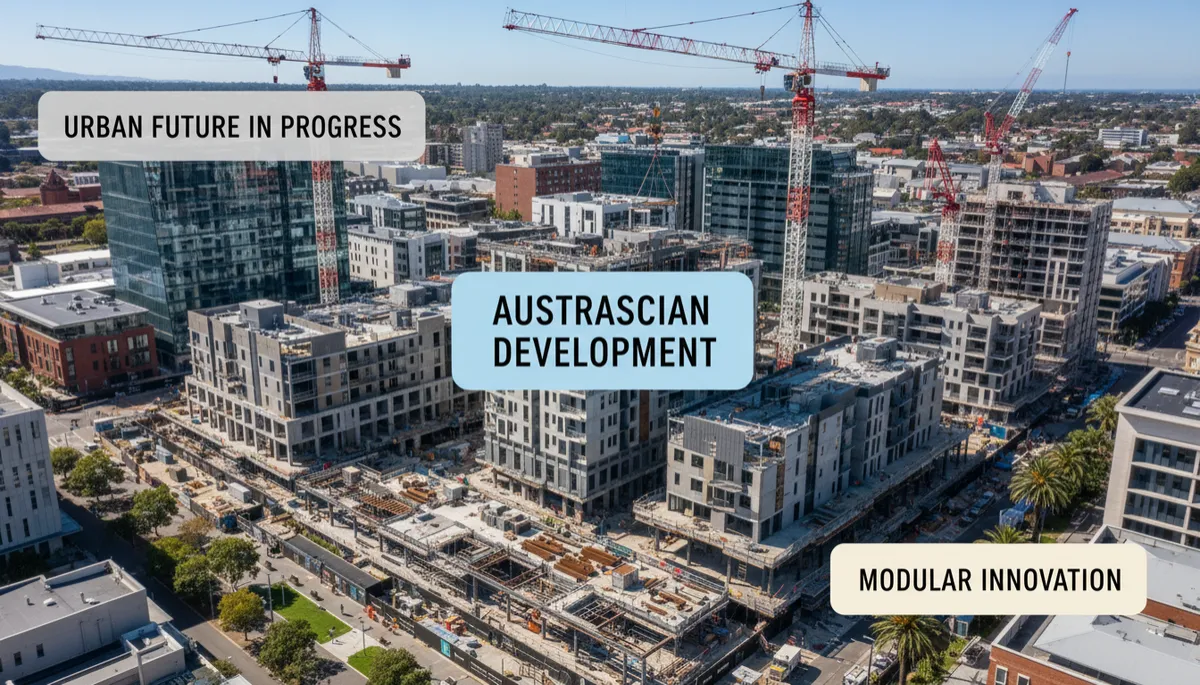
From 2,000+ Pages to an 83-Page Model?
On 25 September 2026, federal sources confirmed that Australia is actively examining New Zealand’s 83-page NZ building code as a template for overhauling the current National Construction Code (NCC), which runs to more than 2,000 pages when volumes and referenced documents are included. The move follows a broader NCC modernisation agenda already underway through the Australian Treasury and the Australian Building Codes Board (ABCB), aimed at reducing complexity and improving usability for the construction industry.
Building on the Senate Select Committee on Productivity’s interim recommendation for a streamlined “Basic Australian Standard”, policymakers are now looking across the Tasman at how New Zealand has maintained performance-based outcomes in a relatively compact document. Any Australian model is expected to retain core safety, accessibility, and energy-efficiency requirements introduced through recent NCC updates, while presenting them in a more accessible structure that better supports innovation, including Modern Methods of Construction (MMC).
Cross-Party Backing for MMC and Prefabricated Housing
A notable feature of the current reform push is the rare cross-party political support for MMC. Both government and opposition figures have publicly endorsed prefabricated housing, modular homes, and other industrialised construction techniques as essential tools in addressing Australia’s housing crisis and chronic productivity challenges in the construction industry. This consensus reflects growing recognition that traditional site-based delivery alone cannot meet ambitious housing supply targets within existing labour and land constraints.
State-level initiatives in Victoria and New South Wales, along with private sector investments such as large-scale prefab manufacturing facilities, have already demonstrated proof of concept. The emerging federal reforms aim to remove remaining regulatory friction and provide a nationally consistent framework so MMC can scale beyond pilot programs and state-specific schemes.
ABCB Tasked with National Voluntary Certification for Prefab Manufacturers
As part of this agenda, the Australian Building Codes Board (ABCB) has been formally requested by the federal government to design a national voluntary certification scheme for prefabricated construction manufacturers. The scheme is expected to cover factory production controls, traceability, quality assurance processes, and alignment with the Australian building code (NCC) and relevant Australian and joint AS/NZS standards.
For builders, engineers, and project managers, a recognised national certification framework could streamline due diligence, simplify approvals, and support risk allocation in contracts and insurance. It should also help distinguish high-performing manufacturers from opportunistic entrants, bolstering confidence among financiers and regulators in prefabricated housing and modular solutions delivered at scale.
MMC in National Competition Policy and the Federal “Pattern Book”
The Albanese government is positioning MMC as a core plank of its updated National Competition Policy, arguing that fragmented regulation, inconsistent procurement practices, and legacy planning rules have constrained productivity and innovation in the built environment. By embedding MMC into competition and productivity frameworks, Canberra is signalling that industrialised construction is not a niche alternative but a mainstream delivery pathway for social, affordable, and market housing, as well as community infrastructure.
Central to this shift is a proposed federal “pattern book” of pre-approved standard designs. Drawing partly on precedents in NSW and the UK, the pattern book would provide a suite of compliant, repeatable typologies—particularly for low- and mid-rise housing—that planning authorities and certifiers can approve more quickly. For MMC players, pattern-book designs tailored to modular and panelised systems could significantly reduce design risk, shorten pre-construction phases, and encourage investment in factory capacity geared to standardised platforms.
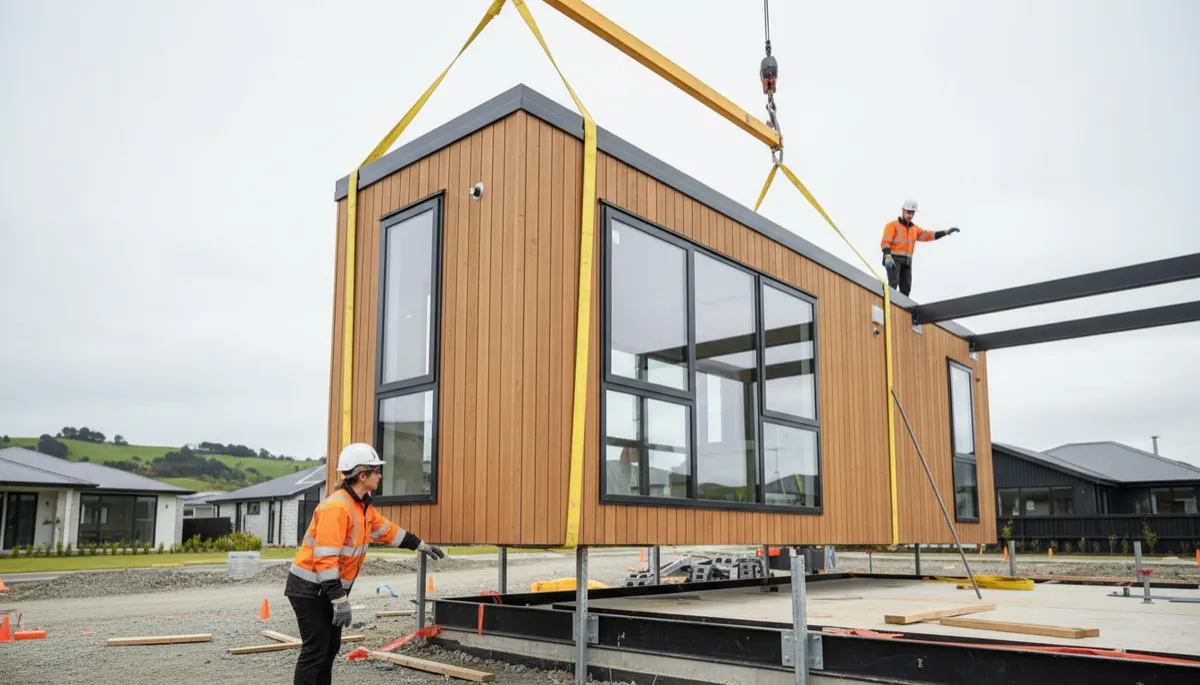
Prefabricated and modular homes are moving from pilots to mainstream delivery in Australasia.
NZ Construction Market: Stabilising After a Tough Downturn
Across the Tasman, the New Zealand construction market is showing signs of stabilisation after a sharp cyclical downturn driven by high interest rates, cost escalation, and weaker residential demand. Recent interest rate cuts by the Reserve Bank of New Zealand are beginning to filter through to project feasibilities, with developers revisiting deferred schemes and public sector clients signalling renewed confidence in pipeline delivery.
Looking ahead to the 2026 national election, infrastructure analysts expect infrastructure investment to strengthen, as both major parties position transport, resilience, and social infrastructure as economic stabilisers and climate adaptation tools. For MMC and offsite providers, this may translate into opportunities in schools, health facilities, and regional housing programs, particularly where speed of delivery and reduced site disruption are valued.
Shared Headwinds: Labour and Materials Across Both Markets
Despite the policy momentum, labour shortages and material cost pressures remain structural headwinds in both Australia and New Zealand. Ageing workforces, constrained migration, and competition from mining and infrastructure continue to tighten skilled trades availability, while global supply chain volatility has kept key material prices elevated and unpredictable compared with pre-pandemic norms.
Proponents argue that Modern Methods of Construction directly address these constraints by shifting labour into controlled factory environments, enabling higher productivity per worker, and reducing waste and rework. Standardised components and long-term supply agreements can also provide greater cost certainty than bespoke, on-site builds. However, realising these benefits at scale will depend on regulatory clarity, consistent demand signals from government procurement, and accessible finance tailored to MMC project risk profiles.
What This Means for Construction Professionals in Australia and New Zealand
For construction professionals, engineers, and project managers, the emerging reforms point to a more integrated Australasian regulatory environment and a clear policy tilt towards MMC. In Australia, a simplified Australian building code informed by the NZ building code, combined with ABCB-led certification and a federal pattern book, could materially change how projects are conceived, procured, and delivered over the remainder of the decade.
In New Zealand, stabilising demand, lower interest rates, and prospective infrastructure-led stimulus create a platform for firms to refine MMC offerings and export expertise back into the Australian market as regulatory settings converge. Firms operating in both jurisdictions will be well placed if they can align their quality systems with the forthcoming Australian certification scheme while continuing to demonstrate performance under New Zealand’s compact but robust code.
SEO Title: Australia Eyes NZ Building Code as MMC Wins Cross-Party Support
Meta Description: Australia is considering New Zealand’s streamlined 83-page building code while backing Modern Methods of Construction, prefabricated housing, and a national certification scheme to tackle the housing crisis and boost productivity across the construction industry.
Meta Keywords: Modern Methods of Construction, MMC, prefabricated housing, modular homes, NZ building code, Australian building code, ABCB, construction industry, housing crisis, pattern book, National Construction Code


